
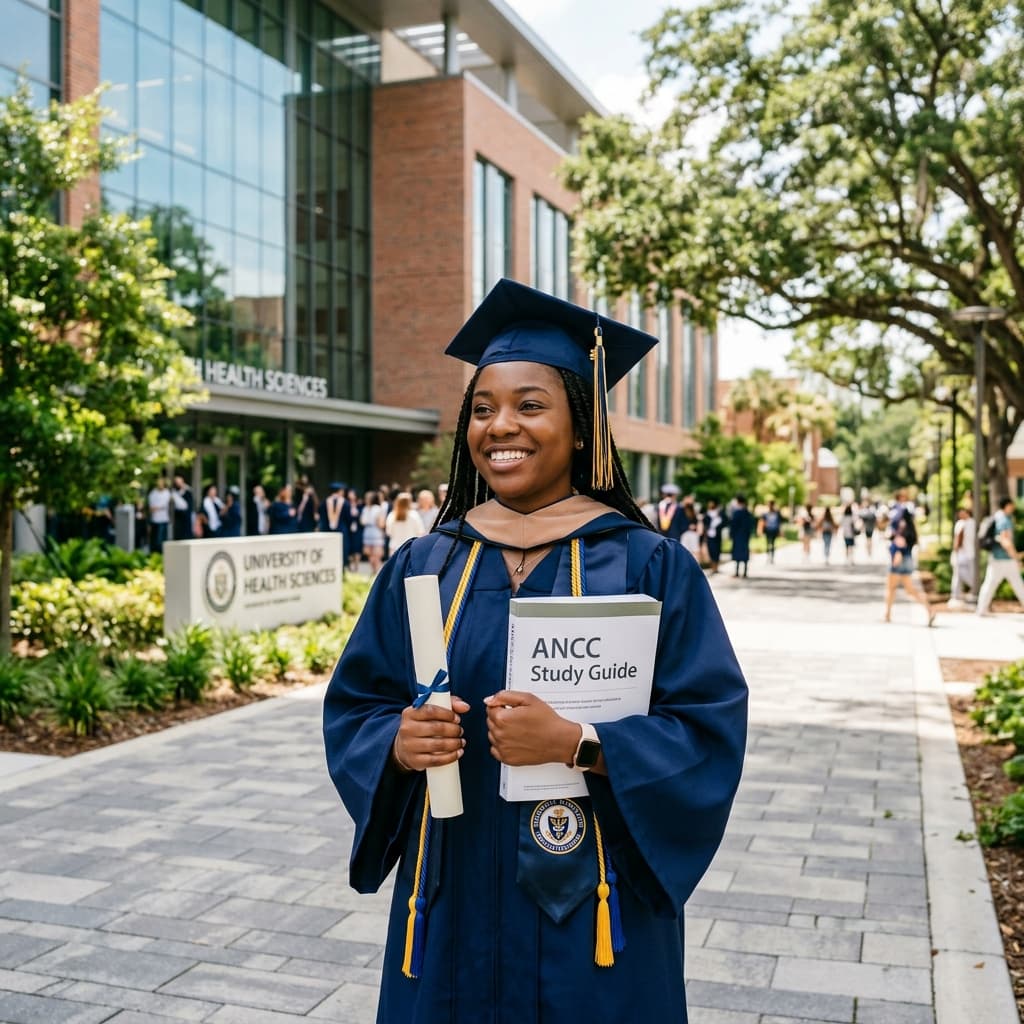
Becoming a PMHNP requires a BSN (4 years), RN experience (1-2 years recommended), and an MSN or DNP with psychiatric specialization (2-4 years). Total timeline: 7-10 years. After graduation, you'll need ANCC PMHNP-BC certification and state NP licensure. New grad PMHNPs earn $115,000-$145,000, with experienced PMHNPs earning $180,000-$210,000+.
The path to becoming a Psychiatric Mental Health Nurse Practitioner (PMHNP) is rigorous, but the rewards—both financial and professional—are unmatched. As the mental health crisis deepens, the demand for qualified providers has skyrocketed. In 2026, PMHNPs are not just "mid-level" providers; in many independent practice states, they are the primary source of mental healthcare.
This guide will walk you through every step of the journey, from your first nursing class to landing your dream job.
Step 1: Earn Your Bachelor of Science in Nursing (BSN)
You cannot build a house without a foundation. For a nurse practitioner, that foundation is the BSN.
Pathways to BSN
- Traditional 4-Year BSN: The standard route for high school graduates.
- ADN-to-BSN Bridge: For Registered Nurses with an Associate Degree. These programs can often be completed online in 12-18 months.
- Accelerated BSN (ABSN): For students who already hold a bachelor’s degree in a non-nursing field. These intense programs take 12-18 months.
Most reputable graduate schools require a BSN for admission. While some "RN-to-MSN" programs exist, they are becoming rarer and often require you to complete BSN coursework anyway.
Step 2: Gain RN Experience
Recommendation: 1-2 Years of Psychiatric NursingTechnically, some "direct-entry" programs allow you to go straight from non-nurse to PMHNP. However, we strongly advise against this.
Why Experience Matters
Psychiatry is nuanced. Unlike cardiology where independent variables (blood pressure, labs) drive much of the treatment, psychiatry relies heavily on clinical interviewing, observation, and intuition.
Working as a psych RN on an inpatient unit teaches you:
- De-escalation of aggressive patients.
- The reality of medication side effects.
- The complexities of the legal system (involuntary holds).
- Inpatient Psych: The gold standard. High acuity, diverse pathology.
- Psych ER: Fast-paced, crisis-focused.
- Corrections: Unique pathology, high autonomy.
Step 3: Choose a PMHNP Program
This is the biggest decision of your career. You have two degree options:
Master of Science in Nursing (MSN)
- Duration: 2-3 Years
- Focus: Clinical practice.
- Best For: Students who want to start practicing sooner.
Doctor of Nursing Practice (DNP)
- Duration: 3-4 Years
- Focus: Clinical practice + leadership, policy, and research implementation.
- Best For: Future executives, academics, or those who want the highest clinical credential.
Key Accreditation to Look For
Ensure your program is accredited by the CCNE (Commission on Collegiate Nursing Education) or ACEN (Accreditation Commission for Education in Nursing). Without this, you cannot sit for your board exam.
Top PMHNP Programs (2026 Rankings)
- University of Pennsylvania
- Rush University
- University of Washington
- Vanderbilt University
- Duke University
Step 4: Complete Clinical Hours
Requirement: Minimum 500 direct patient care hoursThis is where the rubber meets the road. You will rotate through various settings:
- Outpatient Clinics: Managing depression, anxiety, ADHD.
- Inpatient Wards: Schizophrenia, Bipolar I, acute mania.
- Telehealth: increasingly common and valid.
- Addiction Medicine: Detox and MAT (Medication Assisted Treatment).
Step 5: Pass the ANCC PMHNP-BC Exam
Cost: $395 (for ANA members)Graduation isn't the finish line; it's the qualifier for the main event. You must pass the board certification exam offered by the American Nurses Credentialing Center (ANCC).
Exam Stats (2025 Data)
- Questions: 175 (150 scored + 25 pretest)
- Time: 3.5 Hours
- Pass Rate: ~86% for first-time takers (ANCC Certification Data, 2025).
What's on the exam?
- Scientific Foundation (20%): Pathophysiology, pharmacology.
- Advanced Practice Skills (25%): Clinical interviewing, diagnosis.
- Diagnosis & Treatment (25%): Managing conditions across the lifespan.
- Psychotherapy (15%): CBT, motivational interviewing theories.
- Ethical/Legal (15%): Scope of practice, HIPAA.
- Georgette's Review
- Fitzgerald Health Education Associates
Step 6: Get State Licensure
Once board certified, you apply for your Advanced Practice Registered Nurse (APRN) license in your state.
Understanding Authority
Your ability to practice depends on your state's laws:
- Full Practice Authority (FPA): You practice independently. No physician oversight required. (e.g., WA, OR, AZ, NY).
- Reduced Practice: You need a collaborative agreement for prescriptions.
- Restricted Practice: You require supervision for all practice. (e.g., CA, TX, FL).
Step 7: Land Your First Job
The market for new grads is competitive but robust.
Where to look:- New Grad Jobs: Positions specifically open to providers with less than 1 year experience.
- CMHCs (Community Mental Health Centers): Often qualify for loan repayment (HRSA).
- Private Practice: Higher pay, but often demands higher productivity.
Timeline: The Visual Journey
- Year 0-4: BSN Degree (Undergrad)
- Year 4-6: Work as Psych RN (Gain Experience)
- Year 6-8: MSN Program (Grad School)
- Year 8: Boards, Licensure, Credentialing
- Year 9: practicing PMHNP
Cost Breakdown: Is It Worth It?
Let's look at the estimated investment.
| Expense Category | Estimated Cost | Notes |
|---|---|---|
| BSN Tuition | $40,000 - $100,000 | varies public vs private |
| MSN Tuition | $35,000 - $80,000 | varies online vs brick-and-mortar |
| ANCC Exam | $395 | one-time fee |
| DEA License | $888 | every 3 years |
| State Licensing | $200 - $500 | initial fee |
| Review Courses | $500 | optional but recommended |
| Total Investment | $75,000 - $185,000 |
Salary ROI: The 10-Year Outlook
Is the $100k+ debt worth it? Absolutely.
- RN Salary: ~$80,000/year
- PMHNP Salary: ~$155,000/year (BLS, May 2024)
Read our full 2026 Salary Guide for detailed breakdowns by state.
Frequently Asked Questions
Q: Can I become a PMHNP without nursing experience?A: Yes, "Direct Entry" MSN programs exist for non-nurses. They represent an intense, accelerated path. While valid, be prepared for a steep learning curve in your first job compared to peers with RN experience.
Q: How long does it take?A: If you already have a BSN, an MSN program takes about 2 years. If you are starting from scratch, plan for 6-8 years total.
Q: Can I do an online program?A: Yes. Online education is standard in NP training now. However, ensure the program helps with clinical placement. "Find your own preceptor" schools can be a nightmare if you don't have connections.
Q: What is the ANCC exam like?A: It is challenging but fair. It focuses heavily on safety, ethics, and pharmacodynamics. It is not just about memorizing drug doses; it's about clinical decision-making.
Q: Is a DNP worth it?A: For strictly clinical work? No, the pay is usually the same. For future-proofing your career, teaching, or leadership? Yes.
Step-by-Step Pathways to Becoming a PMHNP
The most common pathways to PMHNP certification are:
Path 1: BSN → MSN-PMHNP (Most Common)Duration: 2-3 years | Best for: Working RNs seeking the fastest credential. Programs available fully online with local clinical placements.
Path 2: BSN → DNP-PMHNPDuration: 3-4 years | Best for: Nurses who want the terminal practice degree with research and leadership preparation built in. Increasingly preferred for academic and executive roles.
Path 3: ADN → BSN → MSN-PMHNPDuration: 4-5 years total | Best for: Associate-degree nurses who want to advance. Many RN-to-BSN programs can be completed in 12-18 months alongside full-time nursing work.
Choosing the Right PMHNP Program
With over 200 PMHNP programs in the United States, selecting the right one is crucial. Consider these factors:
Accreditation: Only attend programs accredited by CCNE (Commission on Collegiate Nursing Education) or ACEN (Accreditation Commission for Education in Nursing). Non-accredited programs may not qualify you for ANCC certification. Clinical placement support: Does the program help you find clinical preceptors, or are you responsible for finding your own? Programs that arrange placements save you hundreds of hours of networking and cold-calling. Pass rates: Request the program's ANCC PMHNP-BC first-time pass rate. Top programs exceed 90%. Pass rates below 80% are a red flag. Format: Online programs offer flexibility for working nurses, but ensure they include synchronous components (live lectures, virtual skills labs) alongside asynchronous coursework. Fully asynchronous programs may not provide the clinical reasoning development you need. Cost: Tuition ranges from $25,000 (public universities) to $120,000+ (private institutions). The cheaper program is often the better investment — your PMHNP-BC certification is the same regardless of where you studied.Frequently Asked Questions About Becoming a PMHNP
How long does the entire process take?From BSN to practicing PMHNP, expect 2-4 years depending on whether you pursue an MSN (2-3 years) or BSN-to-DNP (3-4 years) program. If you are starting from an ADN, add 1-2 years for RN-to-BSN completion.
Do I need psychiatric nursing experience to get into a PMHNP program?Most programs prefer psychiatric nursing experience but do not require it. Strong applicants from other specialties (ICU, ED, medical-surgical) are routinely admitted, especially if they can articulate a clear motivation for transitioning into mental health. However, having 1-2 years of inpatient psych or behavioral health experience will strengthen your application and prepare you for clinical rotations.
What is the ANCC PMHNP-BC exam like?The certification exam is a 175-question, computer-based test administered by the American Nurses Credentialing Center. It covers assessment, diagnosis, psychopharmacology, psychotherapy modalities, and professional practice issues. Pass rates for first-time test-takers from accredited programs average 85-95%. Preparation typically involves 8-12 weeks of dedicated study using resources like the Barkley Review, Fitzgerald Review, or APEA.
Can I work while in a PMHNP program?Yes. Most online PMHNP programs are designed for working nurses. However, during clinical rotation semesters (typically 500-640 hours required), you may need to reduce your work schedule. Many students successfully maintain part-time or per-diem nursing positions throughout their program by strategic scheduling and employer flexibility.
What is the job market like for new PMHNP graduates?Exceptionally strong. There are approximately 3 open PMHNP positions for every qualified candidate nationally. Most new graduates receive multiple job offers within 1-3 months of passing their certification exam. The fields facing the biggest shortages — and therefore the fastest hiring — are community mental health, addiction medicine, child/adolescent psychiatry, and rural telehealth.
Ready to start your journey?
Explore New Grad PMHNP Jobs to see what opportunities await you after graduation.
Sources & Methodology Data in this article is sourced from official government and professional association publications:
- Bureau of Labor Statistics (BLS), Occupational Outlook Handbook: Nurse Practitioners, May 2024 release — bls.gov/ooh/healthcare/nurse-anesthetists-nurse-midwives-and-nurse-practitioners.htm
- Health Resources & Services Administration (HRSA), Behavioral Health Workforce Projections, December 2025 — bhw.hrsa.gov
- American Association of Nurse Practitioners (AANP), NP Fact Sheet, 2025 — aanp.org/about/all-about-nps/np-fact-sheet
- American Nurses Credentialing Center (ANCC), PMHNP-BC Certification Data, 2025 — nursingworld.org/ancc
- FNP/PMHNP Dual Certification ROI Analysis — Is adding a Family NP certification worth the investment?
- Burnout Prevention Guide for PMHNPs — Strategies to sustain a long career
- PMHNP Resume & ATS Guide — Optimize your resume for applicant tracking systems
- PMHNP Job Outlook 2026 — Growth rate, demand data, and future predictions