
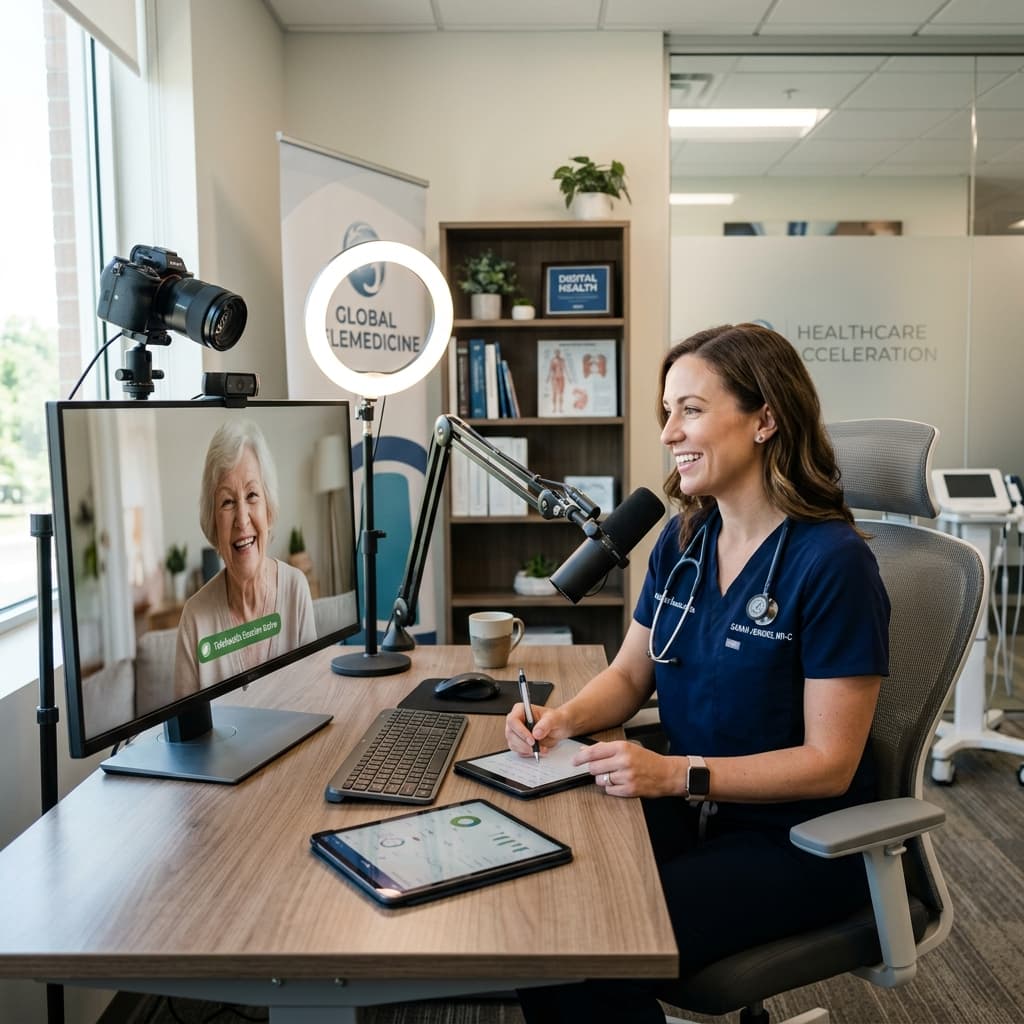
Telehealth vs in-person PMHNP is one of those questions that never stays settled—because your “best” setup depends on patients, state rules, your home life, and your tolerance for admin friction.
So we’re running a simple poll. No wrong answers. The point is to surface the real reasons behind your preference so other PMHNPs can sanity-check their own priorities.
Poll: telehealth or in-person — which do you prefer?
Vote with your choice, then drop a comment with one sentence about why.
Telehealth.
In-person.
A mix of both.
If you’re actively comparing roles, it helps to scan what’s out there side by side. You can look at current telehealth PMHNP jobs and compare them against remote PMHNP jobs (some listings use the terms differently), then sanity-check how “in-person” is defined in the posting.
Why this telehealth vs in-person PMHNP debate keeps coming up
This isn’t really a clinical debate. It’s a work-design debate.
Telehealth can remove commuting, reduce no-shows for some populations, and make it easier to protect your schedule. In-person can make rapport feel faster, give you more nonverbal data, and reduce the weirdness of tech failures and “Are you somewhere private?” moments.
But the bigger reason this question keeps resurfacing is that the market keeps shifting. More roles are remote-eligible than a couple years ago, and employers are still testing what productivity, quality, and retention look like in each model. Translation: you’ll see a lot of variation in expectations even when two jobs have the same title.
If you’re currently job hunting, browsing the full feed of PMHNP jobs can be a quick way to spot patterns—like which employers are pushing hybrid, which are truly remote, and which still want fully in-person coverage.
What PMHNPs tend to like (and dislike) about each option
Telehealth fans usually point to control. More control over your day, your environment, and sometimes your panel. For clinicians who get drained by constant rooming, interruptions, or a chaotic clinic flow, telehealth can feel cleaner. The tradeoff is that “cleaner” can turn into “isolating,” and the boundaries can blur fast if your employer expects you to squeeze in just one more follow-up.
In-person fans often talk about momentum. The day can move faster when you’re not troubleshooting audio, waiting for someone to join, or documenting while staring at your own face in a tiny square. Some also prefer the physical separation between work and home. The tradeoff is obvious: commuting, room turnover, and the extra layers of clinic operations that have nothing to do with care.
Hybrid folks usually want the best of both worlds—and sometimes get the hardest part of both worlds if the schedule isn’t designed well. If you’ve done hybrid, you already know the trap: two different workflows, two different kinds of “friction,” and not enough buffer time.
One practical note: pay can vary by setting, and telehealth roles often advertise higher compensation. That doesn’t automatically mean better. It may reflect productivity targets, payer mix, or a contractor model. If you’re comparing offers, keep an eye on base vs. bonus structure and how they define a “visit.” The PMHNP salary guide can help you frame ranges before you negotiate.
Comment prompts (the kind that actually help other PMHNPs)
If you want your vote to be useful to someone else, add one detail. Not your whole life story—just the variable that makes the difference.
If you chose telehealth, what makes it work for you: fewer no-shows, better focus, childcare logistics, disability access, or something else?
If you chose in-person, what’s the deciding factor: faster rapport, team support, safer boundaries, or a specific patient population?
If you chose hybrid, what’s your ideal split (and what split did your last employer actually schedule)?
And one more: what’s the one thing that would make you switch sides? A better MA/clinic flow? A smaller panel? Better tech support? A different comp model?
Turn your poll answer into a smarter job search
Once you name your preference, use it as a filter—not a label. “Telehealth” can mean W2 with benefits or 1099 with zero support. “In-person” can mean a well-run clinic or a constant game of catch-up. The job description rarely tells you which one you’re getting.
If you’re leaning telehealth, start with the postings, then build a short question list for screens: expected daily visits, documentation time, no-show policy, prescribing support, and how they handle high-acuity triage.
If you’re leaning in-person, ask about rooming workflow, staffing ratios, protected admin time, and whether you’re inheriting a panel.
Either way, set a job alert so you’re not stuck refreshing listings and applying only when you’re already burned out. A steady drip of new roles makes it easier to be picky.
Want to see what’s available right now across models and states?
Telehealth PMHNP Compensation Breakdown
The telehealth revolution has fundamentally transformed psychiatric nurse practitioner practice. According to the American Psychiatric Nurses Association, over 60% of PMHNPs now incorporate some form of telehealth into their practice. But how does this impact compensation?
Telehealth PMHNP Salary Data (2026)
Telehealth PMHNPs earn an average of $135,000-$165,000 annually, depending on the platform and patient volume. Key factors include:
- Per-session rates: $75-$150 per 30-minute session
- Panel size flexibility: Telehealth providers can see 8-12 patients daily vs. 6-8 in-person
- Overhead savings: No commute costs, reduced malpractice premiums (in some states)
- Multi-state licensing: Compact licensure allows PMHNPs to serve patients across state lines, expanding their market
In-Person PMHNP Salary Data (2026)
In-person psychiatric NPs average $140,000-$175,000, with premium pay for:
- Inpatient settings: Hospital-based roles pay 15-25% more than outpatient
- Rural locations: Critical shortage areas offer $10,000-$30,000 signing bonuses
- Specialized populations: Child/adolescent or geriatric specialization commands 10-20% salary premiums
- Administrative roles: Clinical directors earn $180,000-$220,000+
The Hybrid Model: Best of Both Worlds
The fastest-growing trend in 2026 is the hybrid PMHNP role — splitting time between in-person and telehealth. These positions offer:
- Schedule flexibility — Telehealth days can be worked from home
- Patient variety — In-person for complex cases, telehealth for medication management
- Competitive pay — Hybrid roles average $145,000-$170,000
Which Setting Is Right for You?
The choice between telehealth and in-person practice depends on your career stage, lifestyle preferences, and clinical interests. New graduates often benefit from starting in-person to build clinical skills with direct supervision, while experienced PMHNPs may prefer the autonomy and flexibility of telehealth.
Consider these factors when evaluating opportunities:
- Work-life balance priorities: Telehealth eliminates commute time
- Clinical preference: Some conditions benefit from in-person assessment
- Technology comfort: Telehealth requires strong digital literacy
- State licensing: Telehealth across state lines requires additional licensure
Sources Data in this article is sourced from:
- Bureau of Labor Statistics (BLS), Occupational Outlook Handbook, May 2024 — bls.gov/ooh
- American Association of Nurse Practitioners (AANP), NP Fact Sheet, 2025 — aanp.org
- PMHNP Hiring aggregated job board data (May 2026)