
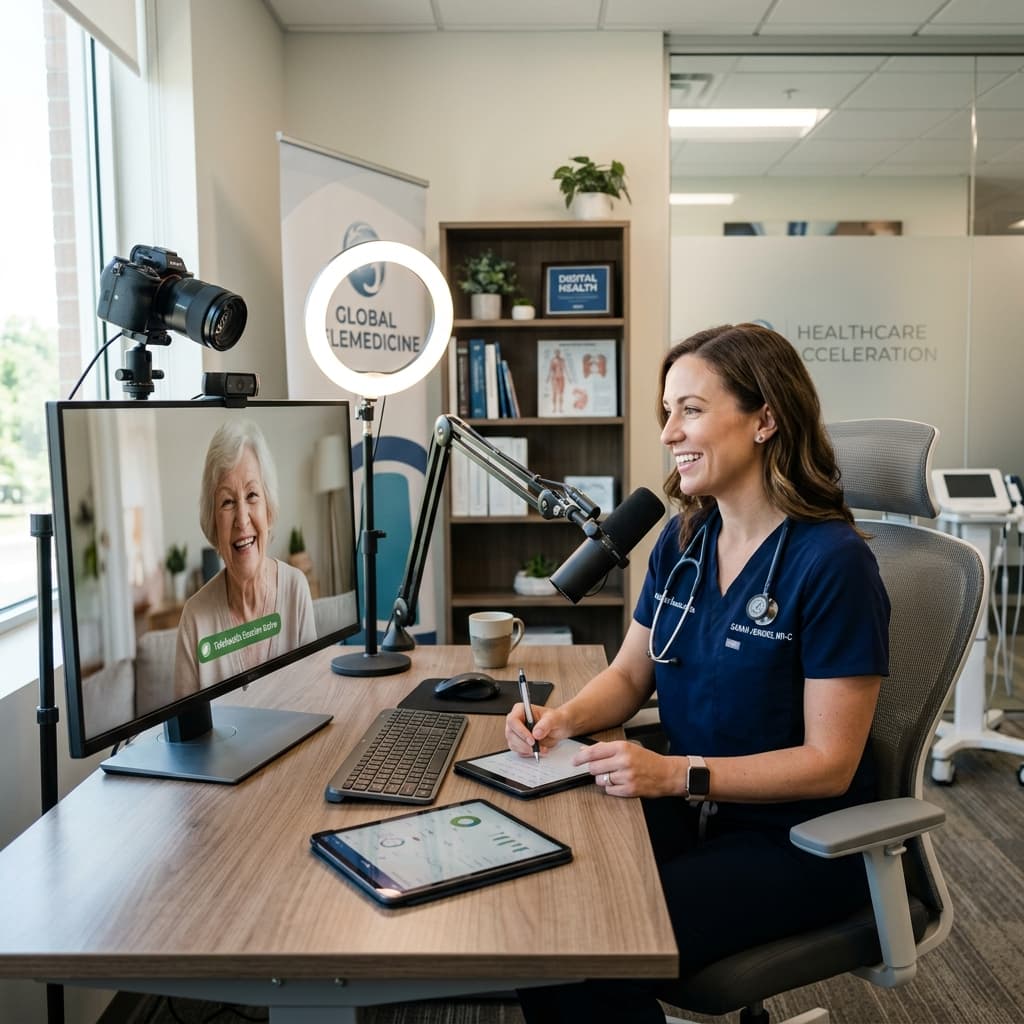
If you're comparing offers and trying to figure out whether telehealth or in-person work pays better, you're not overthinking it. The pay gap is real in many markets. And despite the common assumption that remote work must pay less, telehealth PMHNP salary often comes out higher.
That doesn't mean every virtual role is a winner. It means you need to know where the money is coming from, what's being traded off, and how to compare two offers that look "similar" on paper.
Why telehealth PMHNP salary often runs higher
Telehealth pay tends to climb for a few practical reasons, not because employers are feeling generous. First, telehealth companies frequently hire across multiple states and compete in a more national market. When your competitors aren't just the clinics in your zip code, pay gets pulled upward.
Second, many virtual-first employers are built around access and throughput. If a role is structured with higher visit volume, tight scheduling expectations, or evening/weekend coverage, compensation often rises to match the intensity. You'll see this especially in high-demand prescribing environments where patient access is the business model.
Third, telehealth can reduce overhead for employers (less clinic space, fewer onsite operational costs). Some organizations pass part of that savings into compensation to attract and keep clinicians—particularly experienced PMHNPs who can ramp quickly.
If you want to compare what's actually posted right now, it helps to scan real listings side-by-side. You can start with telehealth PMHNP jobs and then contrast them with broader PMHNP jobs to see how compensation language and productivity expectations differ.
Myth-busting: when in-person can still pay more
There are plenty of situations where in-person roles win. Hospital-based or acute settings can offer strong base pay, differentials, and more predictable benefits. Some community mental health organizations also offer loan repayment or strong retirement packages that narrow (or beat) a higher telehealth base.
Location is another big factor. In hot markets, in-person employers may pay aggressively to staff clinics—especially when they need on-site coverage and can't "solve" the problem with remote hiring.
A quick reality check: the national average PMHNP compensation typically lands around $139K–$155K, with entry-level around ~$126K. But those numbers swing widely by state and setting. Before you decide telehealth is "always" higher, check a state-by-state baseline in the PMHNP salary guide. Then compare offers against that local benchmark.
The data signals behind the pay gap (and what they imply)
A few market indicators help explain why telehealth pay can be competitive right now. Remote-eligible PMHNP roles are now about 62% of the market (up from 55% in 2025 and 48% in 2024). More remote roles doesn't automatically mean lower pay; it often means more employers competing for the same limited pool of experienced clinicians.
At the same time, time-to-fill has shortened to about 32 days (down from 45 in 2024). Faster hiring cycles can push compensation up, especially when employers need coverage quickly and don't want to lose candidates to competing offers.
Telehealth also tends to be more transparent about pay ranges because it hires at scale. That transparency can work in your favor during negotiation—if you know how to use it.
How to compare telehealth vs in-person offers (so you don't get fooled)
The biggest mistake is comparing base salary alone. Telehealth roles can look higher but include hidden "give-backs," like uncompensated admin time, tighter productivity targets, or lower support staffing.
When you're evaluating two offers, try to translate both into the same units: expected patient-facing hours, average daily visit count, expected response time to messages, and how often you're on the hook outside scheduled sessions. If one job pays $10K more but expects a meaningfully higher volume, that's not really a raise—it's a different workload.
Also look closely at the structure. Is it W-2 with benefits or 1099? Is there a base plus RVU/bonus model? Are no-shows paid? Who handles prior auths and refills? Telehealth companies vary a lot here.
Finally, don't ignore geography even in remote roles. Some employers still peg pay bands to your state. If you're job searching in a high-demand state like California, you may see higher telehealth ranges than the same company offers elsewhere.
The negotiation takeaway: what to ask for (and how to ask)
If you're choosing between telehealth and in-person, the cleanest negotiation strategy is to anchor on measurable expectations. Instead of "Can you do better on salary?" try "If the schedule is built for X visits per day, what base and bonus structure matches that volume?" It's harder for an employer to dodge a workload-based comparison.
If you prefer telehealth, negotiate support and sustainability, not just dollars. Admin time, cap on daily visits, paid no-shows, and protected time for documentation can be worth more than a small base increase.
If you prefer in-person, negotiate for what telehealth often bakes in: signing bonuses, retention bonuses, schedule flexibility, and clear ceilings on call or weekend coverage.
Bottom line
Telehealth often pays more, but it's not "free money." In many cases, the higher number is compensation for higher throughput, broader coverage needs, or faster ramp expectations. The best-paid job is the one where the pay matches the workload—and the terms are written clearly enough that you can hold the employer to them.
If you want to see what's paying right now, compare real postings across settings and states.
Browse telehealth PMHNP jobs → https://pmhnphiring.com/jobs/telehealthSources Data in this article is sourced from:
- Bureau of Labor Statistics (BLS), Occupational Outlook Handbook, May 2024 — bls.gov/ooh
- American Association of Nurse Practitioners (AANP), NP Fact Sheet, 2025 — aanp.org
- PMHNP Hiring aggregated job board data (May 2026)