
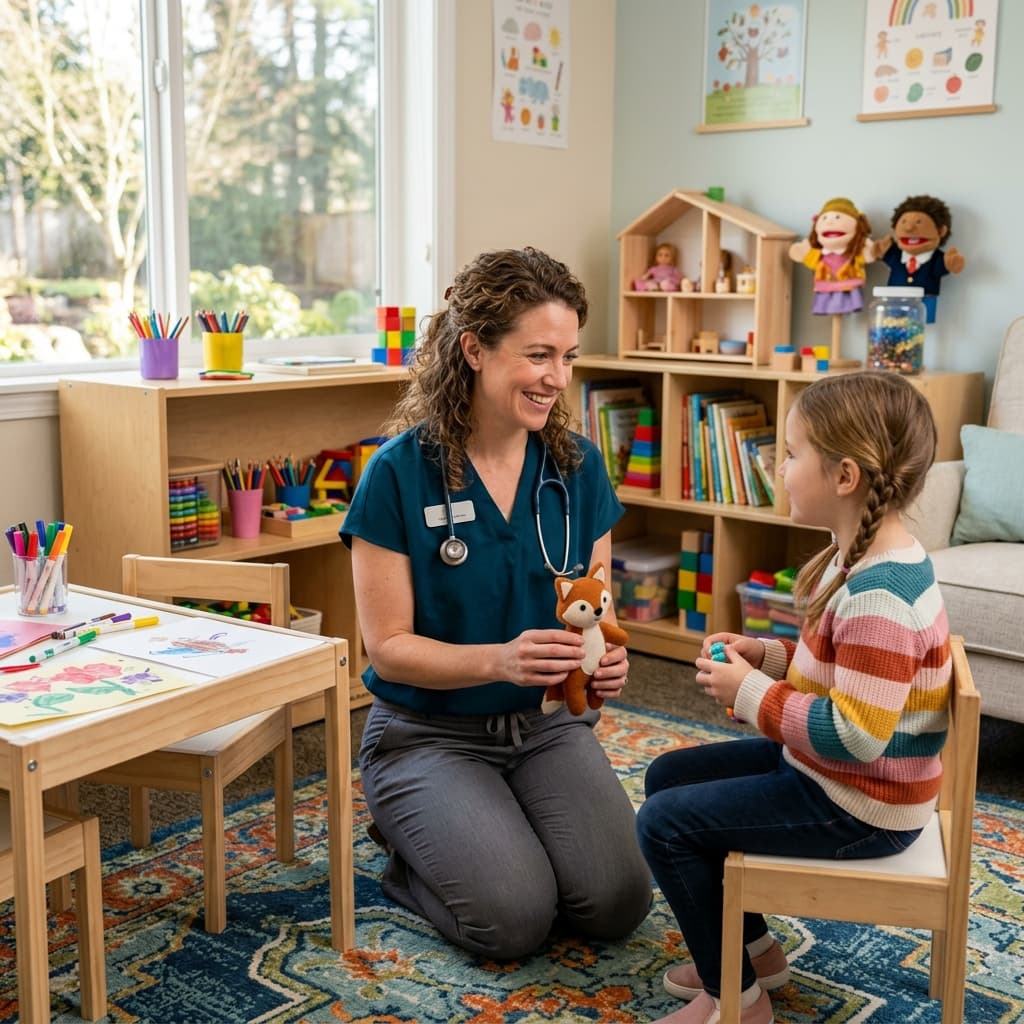
Child and adolescent psychiatric NPs specialize in treating mental health conditions in patients from birth through age 21. The PMHNP-BC certification covers the full lifespan (including pediatrics), but C&A-focused roles often require or prefer pediatric clinical hours, play therapy training, or a post-graduate fellowship. Demand is explosive — the US has only ~8,300 child psychiatrists for 74 million children, and C&A-focused PMHNPs typically earn a $10K-$20K salary premium over general adult PMHNP roles.
The youth mental health crisis has created an urgent, sustained need for psychiatric providers trained in child and adolescent care. With pediatric psychiatric emergency visits up 50% since 2019 and a catastrophic shortage of child psychiatrists nationwide, PMHNPs specializing in this population are among the most sought-after providers in all of healthcare.
The Youth Mental Health Crisis by the Numbers
The data paints a stark picture of the pediatric mental health landscape in 2026:
- 1 in 5 children (ages 3-17) has a diagnosable mental health condition — approximately 15 million youth
- Suicide is the 2nd leading cause of death for ages 10-24, and self-harm ER visits among adolescent girls have increased 51% since 2019
- Only ~8,300 child and adolescent psychiatrists practice in the US (for 74 million children and adolescents)
- 70% of US counties have zero child psychiatrists — this means the majority of American children have no local access to a child psychiatric specialist
- Average wait time for a child psychiatric evaluation: 6-8 months in most metro markets, and 12+ months in rural areas
- Pediatric psychiatric ED visits increased 50% between 2019-2023 and have not returned to pre-pandemic levels
- ADHD diagnosis rates continue rising — 11.4% of children ages 3-17 have received an ADHD diagnosis, and less than half receive adequate treatment
- Eating disorder hospitalizations among adolescents have doubled since 2019, requiring integrated psychiatric and medical management
- Anxiety disorders are now the most common pediatric psychiatric diagnosis, affecting approximately 7.1% of children ages 3-17
The Surgeon General declared a national youth mental health crisis in 2021. Three years later, the supply-demand gap has only widened.
What C&A PMHNPs Do
Common Conditions by Age Group
| Age Group | Key Conditions | PMHNP Focus |
|---|---|---|
| Early childhood (0-5) | Attachment disorders, ASD screening, trauma responses, oppositional behavior, separation anxiety, sleep disorders, selective mutism | Parent-child interaction therapy (PCIT), diagnostic assessment using age-appropriate tools, caregiver psychoeducation, developmental screening (M-CHAT, ASQ-SE) |
| School-age (6-12) | ADHD, anxiety, depression, learning disabilities with psychiatric comorbidity, trauma/PTSD, enuresis/encopresis, ODD/CD | Stimulant and non-stimulant medication management, school consultation and IEP/504 coordination, behavioral interventions, family therapy integration |
| Adolescent (13-17) | Depression, anxiety, eating disorders, self-harm and suicidality, substance experimentation, gender dysphoria, first-episode psychosis, social media-related conditions | Psychopharmacology with adolescent-specific considerations, crisis intervention and safety planning, motivational interviewing for substance use, collaborative care with therapists and schools |
| Transitional age (18-21) | First-episode psychosis, emerging personality disorders, college adjustment difficulties, substance use disorders, transition from pediatric to adult systems | Diagnostic clarification, medication stabilization, transition planning to adult providers, independence skill building |
Day-to-Day Responsibilities
A typical C&A PMHNP workday involves:
- Comprehensive psychiatric evaluations (60-90 minutes for initial assessments — significantly longer than adult intakes because of collateral information gathering from parents, teachers, and therapists)
- Psychopharmacological management with growth, development, and metabolic monitoring considerations unique to pediatrics (height/weight tracking, metabolic panels for antipsychotics, ECG monitoring for certain stimulants)
- School collaboration: Attending or contributing to IEP meetings, writing 504 plan accommodation letters, consulting with school counselors about behavioral observations, addressing school refusal
- Family therapy integration: Working with parents, guardians, and siblings is not optional in pediatric psychiatry — it's essential. Parent management training, psychoeducation about diagnoses, and family system interventions are core competencies
- Crisis assessment: Evaluating suicidal ideation, self-harm, acute psychosis, and agitation in minors — with unique legal and ethical considerations around minor consent, parental notification, and mandatory reporting
- Multi-provider coordination: Regular communication with pediatricians, therapists, school counselors, child welfare caseworkers, and juvenile justice system contacts
The Unique Challenge of Pediatric Psychopharmacology
Prescribing for children and adolescents differs fundamentally from adult practice:
- FDA indications are limited: Many psychiatric medications are prescribed off-label in pediatrics. You must understand the evidence base for off-label use and document your clinical reasoning.
- Growth monitoring: Stimulants and certain antipsychotics can affect height and weight trajectories. Regular plotting on growth curves is mandatory.
- Metabolic monitoring: Second-generation antipsychotics carry significant metabolic risks in youth — weight gain, glucose dysregulation, lipid abnormalities. Monitoring protocols from the APA/AACAP must be followed.
- Suicidality black box warnings: SSRIs and SNRIs carry FDA black box warnings for increased suicidality risk in patients under 25. Close monitoring during initiation and dose changes is required.
- Developmental pharmacokinetics: Children metabolize many medications faster than adults. Doses per kilogram may actually be higher than adult doses for some medications.
- Assent and consent: Adolescents old enough to participate in treatment decisions need to be included. Balancing parental authority with adolescent autonomy is a daily clinical challenge.
Certification & Specialization Pathways
PMHNP-BC Covers the Lifespan
The ANCC PMHNP-BC certification already authorizes you to treat patients across the full lifespan — including neonates through geriatric patients. However, most C&A-focused employers want to see evidence of specific pediatric preparation:
- Pediatric clinical hours during your PMHNP program (minimum 200-500 hours preferred; some employers require 250+ hours specifically in C&A settings)
- Specific C&A experience in your work history — even 6-12 months of supervised C&A practice
- Specialized training in evidence-based pediatric approaches: play therapy, parent management training, Trauma-Focused CBT, pediatric pharmacology CE courses
Additional Certifications That Strengthen Your Profile
| Certification | Organization | Value for C&A PMHNP |
|---|---|---|
| Registered Play Therapist (RPT) | Association for Play Therapy | Highly valuable for working with ages 3-10; demonstrates competence in non-verbal therapeutic techniques |
| Trauma-Focused CBT (TF-CBT) | National TF-CBT Training Program | Essential for pediatric trauma work; many C&A positions list this as preferred or required |
| DBT Certification | Behavioral Tech / Linehan Institute | Highly valued for adolescent populations, especially for self-harm, suicidality, and emotional dysregulation |
| PCMH Specialist | AACAP | Pediatric mental health expertise credential from the nation's leading child psychiatry organization |
| Applied Behavior Analysis (ABA) Basics | BACB or CE courses | Helpful for working with ASD population and behavioral challenges in younger children |
| Motivational Interviewing (MI) Training | MINT | Critical for engaging adolescent patients who may be resistant to medication or treatment |
Fellowship Programs
Several institutions offer specialized C&A PMHNP fellowships — these are highly competitive but provide unmatched preparation:
- Yale Child Study Center — 12-month fellowship with competitive stipend, one of the most prestigious programs in child psychiatry
- Duke University — Pediatric behavioral health fellowship with research opportunities
- Cincinnati Children's Hospital — NP/PA child psychiatric fellowship, highly structured clinical rotations
- Boston Children's Hospital — Child psychiatry NP fellowship integrated with one of the nation's top pediatric hospitals
- Various VA programs — Focus on transitional-age youth (18-25) with military/veteran family backgrounds
- AACAP-Affiliated Programs — Several university-based programs aligned with the American Academy of Child and Adolescent Psychiatry
Work Settings
Outpatient Child Psychiatry Clinics
The most common C&A PMHNP setting. You'll carry a caseload of 80-120 patients, seeing 12-18 patients daily (fewer than adult practice due to longer appointments).
- Pros: Longitudinal relationships with children and families, predictable schedule, collaboration with therapists and psychologists, intellectual stimulation from complex developmental cases
- Cons: Long wait lists create pressure to see more patients, complex family dynamics requiring diplomatic navigation, insurance prior authorization battles for medications and services, emotional weight of working with struggling children
- Salary: $150K-$185K (W-2)
School-Based Mental Health
A rapidly growing model where PMHNPs are embedded directly in school districts:
- Structure: Serve 1-3 schools, see students during school hours, coordinate with counselors, teachers, and administrators
- Salary: $110K-$150K (often funded through school district budgets, grants, or community health center partnerships)
- Advantage: Access patients where they already are, dramatically reduces barriers to care (no transportation, no missed school), identifies issues early, reduces stigma, and provides real-time teacher/counselor collaboration
- Growing states: Texas, California, Colorado, Oregon, Connecticut, Ohio, Minnesota are all expanding school-based NP programs
- Schedule perk: Some school-based contracts align with the school calendar — potentially offering summers off or reduced hours
- Challenge: Working within school administrative systems, managing confidentiality with minors, coordinating with parents who may not be present during appointments
Pediatric Emergency Psychiatry
For those who thrive in acute, high-intensity settings:
- Structure: Emergency department coverage, crisis stabilization, involuntary hold assessments (5150/Baker Act/equivalent), acute medication management
- Salary: $140K-$195K+ (shift differentials, weekend and holiday premiums can add $15K-$30K)
- Intensity: High-acuity patients including active suicidality, acute psychosis, severe aggression, and acute eating disorder medical complications
- Advantage: Shift-based (no call, no panel management, clock out and done), high clinical autonomy, immediate clinical impact
- Challenge: Emotional intensity, exposure to severe pediatric psychiatric crises, managing agitated adolescents, disposition challenges (shortage of pediatric psychiatric beds)
Telehealth C&A Psychiatry
Exploding post-COVID, especially for ADHD and anxiety management:
- Structure: Remote video visits with children and adolescents, often 20-30 minute follow-ups, with parent/guardian present for younger children and separately for adolescents
- Salary: $130K-$180K (W-2) or $80-$150/hour (1099)
- Challenge: Engaging children over video requires fundamentally different techniques than adults — shorter attention spans, need for visual props, managing dual-screen household distractions, ensuring privacy for adolescent disclosures
- Opportunity: Multi-state licensure opens access to severely underserved rural areas where children may have zero local psychiatric providers; growing number of telehealth-only C&A companies actively recruiting
Residential Treatment Facilities (RTF)
Working with severely ill youth in structured, 24/7 care environments:
- Structure: Inpatient-style care for programs lasting 30 days to 6+ months
- Salary: $130K-$170K
- Population: Severe behavioral disorders, treatment-resistant cases, forensic/juvenile justice involved youth, youth with failed outpatient placements
- Role: Primary psychiatric provider, medication management, treatment team leadership, discharge planning, family reintegration preparation
- Challenge: High-acuity population, trauma histories are nearly universal, staff burnout is common, managing PRN medication protocols for behavioral crises
Salary & Compensation
C&A-focused PMHNPs consistently earn a premium over general adult PMHNP roles, reflecting the specialized knowledge required and the severity of the provider shortage:
| Setting | C&A PMHNP Salary | General Adult PMHNP Salary | Premium |
|---|---|---|---|
| Outpatient clinic | $155K-$185K | $140K-$170K | +$10-15K |
| Hospital/ED | $150K-$195K | $140K-$180K | +$10-15K |
| School-based | $110K-$150K | N/A | Unique setting |
| Telehealth | $135K-$185K | $130K-$175K | +$5-10K |
| Private practice | $170K-$250K+ | $160K-$230K+ | +$10-20K |
| Residential treatment | $130K-$170K | $125K-$160K | +$5-10K |
The premium exists because:
- Fewer C&A-trained psychiatric providers exist in the pipeline
- Pediatric psychopharmacology requires specialized knowledge beyond standard PMHNP training
- Family involvement adds complexity and time (billing for collateral contacts, longer intake sessions)
- Risk management considerations are heightened with minors (consent, reporting, safety planning)
- Emotional intensity of the work leads to higher turnover, making experienced C&A providers especially valuable
How to Break Into C&A Psychiatry
For New Grads
- Maximize pediatric clinical hours during your PMHNP program — specifically request C&A placements and document your pediatric-specific hours separately
- Seek new grad positions at Community Health Centers (CHCs) — they often serve high volumes of children and families and may have more structured onboarding
- Apply to C&A-focused residency/fellowship programs — structured mentorship is invaluable and positions you as a C&A specialist from day one
- Get TF-CBT certification early — it's a significant differentiator for pediatric roles and many employers specifically look for it
- Consider school-based positions — generally lower patient acuity than ED or inpatient, built-in mentorship from school psychologists, and a supportive entry into pediatric practice
- Volunteer at pediatric crisis lines (Crisis Text Line, 988 Lifeline) — builds comfort with youth crisis assessment
For Experienced Adult PMHNPs Transitioning
- Take continuing education in pediatric psychopharmacology — AACAP offers excellent online courses specifically for prescribers
- Start seeing adolescents (14-17) in your current practice — this is a natural bridge population that shares characteristics with both adult and pediatric practice
- Shadow a child psychiatrist or C&A PMHNP to build comfort with younger populations — even 2-3 clinic days provides enormous insight
- Get trained in developmental screening tools (M-CHAT-R for ASD, Vanderbilt for ADHD, Conners Rating Scales) and start using them in your current practice with younger patients
- Attend AACAP's annual meeting — the nation's premier child psychiatry conference includes NP-specific tracks and networking opportunities
- Consider a post-graduate certificate if your program had minimal pediatric hours — several universities offer 12-18 month C&A-focused certificates
The Bottom Line
Child and adolescent psychiatric care is one of the most impactful, in-demand, and well-compensated PMHNP specializations available in 2026. The provider shortage is severe and worsening, the compensation reflects that scarcity, and the work — helping young people during their most formative and vulnerable years — is deeply meaningful. For PMHNPs willing to invest in the specialized knowledge required, C&A psychiatry offers extraordinary career stability and professional satisfaction.
Explore C&A opportunities: Child & adolescent PMHNP jobs | All PMHNP jobs | New grad guideRelated resources:
- New Grad PMHNP Guide 2026 — Best strategies for landing your first C&A role
- PMHNP Salary by State 2026 — Where C&A roles pay the most
- Remote PMHNP Jobs Guide — Telehealth C&A opportunities
- PMHNP Resume & ATS Guide — Optimize your application for C&A positions
Frequently Asked Questions
Do I need a separate certification to treat children as a PMHNP?
No. The ANCC PMHNP-BC certification covers the entire lifespan from birth through geriatric patients. However, employers strongly prefer candidates with documented pediatric clinical hours and relevant training (TF-CBT, play therapy, developmental screening). Some job postings specify a minimum number of pediatric clinical hours.
What age range does C&A psychiatry cover?
Most C&A positions focus on patients ages 4-17, with some extending to "transitional age youth" (18-25). The specific age range varies by employer — school-based positions may focus on ages 5-18, while clinics may see patients from age 3 through 21.
Can I specialize in C&A psychiatry as a new graduate?
Yes, and it's actually an excellent time to do so. Some employers prefer new graduates for C&A roles because they can be trained in the employer's specific clinical approach from the start. C&A fellowships are specifically designed for new graduates. The key is having documented pediatric clinical hours from your PMHNP program.
How does prescribing for children differ from adults?
Fundamentally. Children metabolize many drugs differently (often faster) than adults, FDA-approved indications are narrower (requiring comfort with evidence-based off-label use), growth monitoring is mandatory with stimulants and antipsychotics, and the black box warning on SSRIs/SNRIs requires enhanced suicide monitoring. Working with parents on medication decisions adds another layer of complexity not present in adult practice.
Is the C&A salary premium really worth the additional specialization?
For most PMHNPs, yes. The $10K-$20K annual premium compounds over a career, the job security is extraordinary (the shortage will only worsen for years), and the clinical work is deeply rewarding. Additionally, C&A-specialized PMHNPs who open private practices often earn significantly more than general adult providers because of the extreme demand and limited supply.
Sources Data in this article is sourced from:
- Bureau of Labor Statistics (BLS), Occupational Outlook Handbook, May 2024 — bls.gov/ooh
- American Association of Nurse Practitioners (AANP), NP Fact Sheet, 2025 — aanp.org
- PMHNP Hiring aggregated job board data (May 2026)