
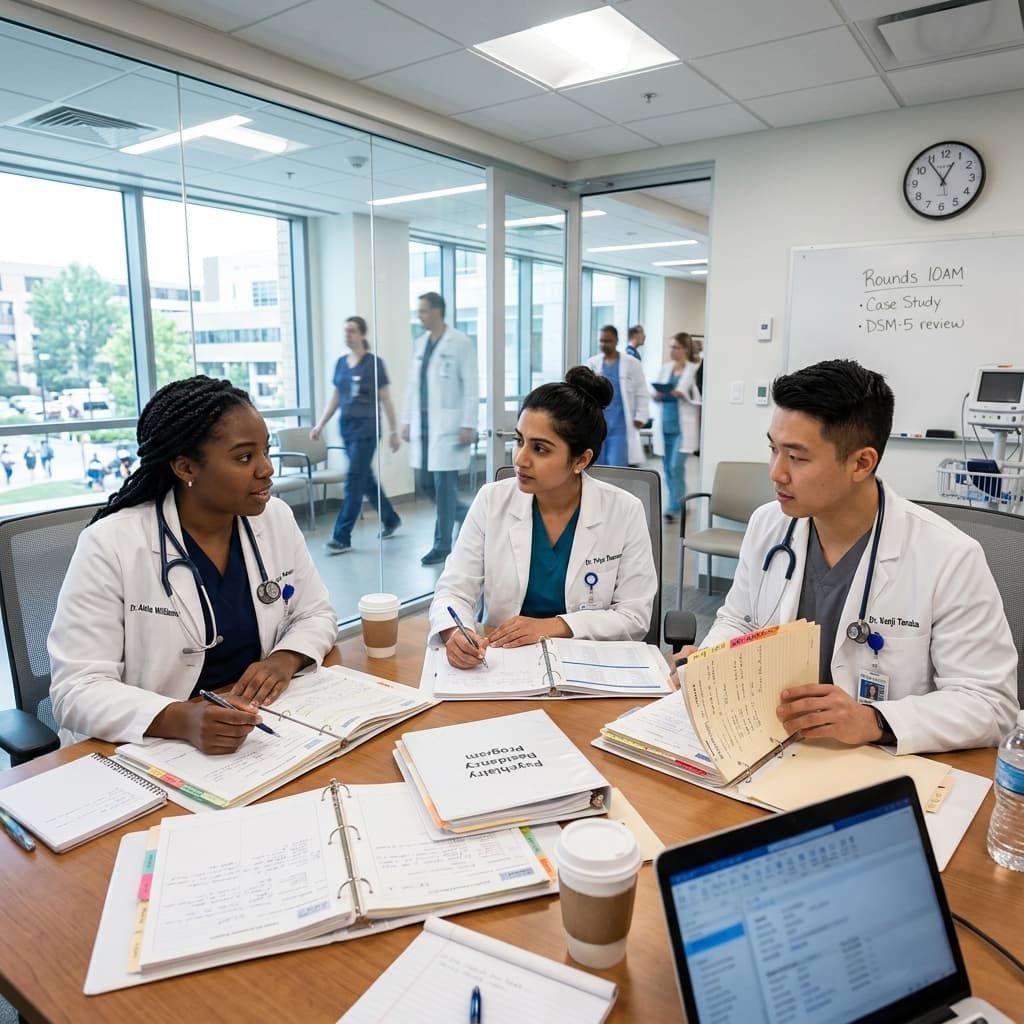
PMHNP residencies and fellowships are 12-month paid postgraduate training programs designed for newly certified psychiatric nurse practitioners. They include supervised clinical experience, didactic education, and mentorship. Salaries typically range from $70,000-$110,000 during the program. They're optional — but increasingly recommended for building confidence and clinical expertise.
Unlike physician residencies, PMHNP residencies and fellowships are not required to practice. You can begin seeing patients immediately after certification. However, these programs provide structured training, mentorship, and a supported ramp-up that many new graduates find invaluable.
Here's everything you need to know — including a directory of current programs.
PMHNP Residency vs Fellowship: What's the Difference?
The terms are often used interchangeably, but there are subtle distinctions:
| Feature | Residency | Fellowship |
|---|---|---|
| Focus | Broad psychiatric care across settings | Usually more specialized (e.g., child/adolescent, addiction) |
| Duration | 12 months (typically) | 12 months (typically) |
| Structure | 80% clinical, 20% didactic | Varies — may include research |
| Salary | $70,000-$95,000 | $80,000-$110,000 |
| Accreditation | CAPP or ANCC | CAPP or ANCC |
| Typical employer | VA, CMHC, health system | Academic medical center |
In practice, the two terms mean essentially the same thing: a structured postgraduate training program for early-career PMHNPs.
2025-2026 PMHNP Residency & Fellowship Directory
These programs have been verified through institutional websites and the Consortium for Advanced Practice Providers (CAPP) directory, last updated February 2025.
VA Health System Programs
The Department of Veterans Affairs operates several PMHNP residency programs focused on veteran mental healthcare:
VA Greater Los Angeles Healthcare System (VAGLAHS)- Location: Los Angeles, California
- Duration: 12 months
- Structure: 80% clinical, 20% didactic across inpatient and outpatient settings
- Focus: PTSD, substance use, severe mental illness in veteran populations
- Status: Second cohort graduated August 2025
- Apply: Through the VA careers portal
- Location: Durham, North Carolina
- Duration: 12 months
- Partner: Duke University School of Nursing
- Focus: Veteran mental healthcare across the lifespan
- Apply: USAJobs.gov
University-Affiliated Programs
Duke University — Psychiatric Mental Health NP Postgraduate Training Program- Location: Durham, North Carolina
- Duration: 12 months
- Setting: Academic medical center + community rotations
- Highlights: One of the most established programs in the country. Strong research component.
- Location: Columbia, Missouri
- Duration: 12 months
- Focus: Adult psychiatry and child/adolescent psychiatry
- Highlights: Applications accepted year-round. Intensive clinical training with faculty mentorship.
- Location: San Diego, California
- Duration: 12 months
- Focus: Adults with moderate to severe mental illness in underserved communities
- Accreditation: ANCC Commission on Accreditation
- Highlights: Serves vulnerable populations; strong training in psychopharmacology
Health System Programs
Atrium Health — Advanced Practice Provider Fellowship- Location: Charlotte, North Carolina
- Duration: 12 months
- Setting: Large health system with multiple practice sites
- Focus: Behavioral health across the care continuum
- Location: Falls Church, Virginia (Washington D.C. metro)
- Duration: 12 months
- Setting: Major health system in the D.C. area
- Focus: Behavioral health integration
Community Health Center Programs
Thundermist Health Center — PMHNP Fellowship- Location: Rhode Island
- Duration: 12 months (salaried with benefits)
- Focus: Community mental health / FQHCs
- Accreditation: Achieved CAPP national accreditation in May 2025
- Highlights: Specifically prepares PMHNPs for FQHC careers. Eligible for NHSC loan repayment.
- Location: Greater Boston, Massachusetts
- Duration: 12 months
- Focus: Community health center setting
- Target: Recent graduates or newly certified PMHNPs
- Location: Connecticut (with national reach)
- Duration: 12 months
- Focus: Psychiatric mental health track within a national NP residency framework
- Highlights: Part of a well-established national residency model
- Location: Ohio
- Duration: 12 months
- Setting: Community mental health
- Focus: Mentorship and clinical experience for newly board-certified PMHNPs
- Highlights: Strong focus on dual-diagnosis and addiction treatment
Fully Remote Programs
Modyfi Health — PMHNP Residency Program- Location: Fully remote
- Duration: 12 months
- Target: Newly board-certified PMHNPs
- Highlights: One of the few fully remote PMHNP residency programs. Applications open for Fall 2025 cohort.
- Apply: modyfihealth.com
The Jewish Board — Psychiatric NP Residency Program
- Location: New York, New York
- Duration: 12 months
- Setting: Behavioral health services across NYC
- Focus: Community psychiatry in diverse urban populations
What Do PMHNP Residencies Pay?
Residency salaries are lower than staff positions, but you're being paid to learn:
| Program Type | Salary Range | Benefits Included? |
|---|---|---|
| VA Programs | $80,000-$100,000 | Yes (federal benefits) |
| Academic/University | $75,000-$95,000 | Usually yes |
| Health Systems | $80,000-$110,000 | Yes |
| Community Health | $70,000-$90,000 | Yes (+ possible loan repayment) |
| Remote Programs | $75,000-$95,000 | Varies |
After completing a 12-month residency, you can expect to earn $130,000-$160,000+ in your first staff position — often with a competitive advantage over non-residency-trained peers.
Should You Do a Residency? Honest Pros & Cons
Pros
- Structured mentorship with experienced psychiatrists and PMHNPs
- Gradual caseload increase — no sink-or-swim
- Exposure to multiple settings (inpatient, outpatient, crisis, addiction)
- Competitive advantage for future jobs — some employers prefer residency-trained
- Networking with colleagues and faculty who become lifelong references
- Reduced malpractice anxiety — you're supported while building confidence
Cons
- Lower salary for 12 months ($70-$110K vs $130-$160K+ at staff positions)
- Opportunity cost — you forgo ~$40,000-$60,000 in potential earnings
- Limited locations — only ~15-20 programs exist nationwide
- Not required — you can practice immediately after certification without one
- Some programs are disorganized — quality varies significantly
Our take
If a program is accredited (CAPP or ANCC), pays reasonably, and has strong clinical mentorship — it's likely worth it. The confidence and competence you build in year 1 pays dividends for your entire career. But avoid taking a residency just to delay starting — if you're ready and have mentorship at a regular job, that works too.
How to Apply
Timeline
Most programs recruit 6-12 months before start dates. Fall cohorts (starting August-September) typically accept applications from January to April.
Typical Requirements
- Current PMHNP certification (ANCC) or board-eligible
- Active RN license in the program's state
- MSN or DNP from an accredited program
- 0-2 years post-certification experience (most prefer new grads)
- Personal statement explaining interest in postgraduate training
- 2-3 letters of recommendation (clinical faculty, preceptors)
- CV/resume
Where to Find Programs
- CAPP Directory — apppostgradtraining.com — The most comprehensive directory of NP/PA postgraduate programs. Updated regularly.
- ANCC Accredited Programs — Search the ANCC website for accredited NP residencies
- VA Careers — USAJobs.gov — Search "PMHNP residency" or "psychiatric NP fellowship"
- Our Job Board — Browse new grad PMHNP positions including fellowship-track roles
Alternatives to Formal Residencies
Don't have access to a residency program? These alternatives provide similar structured support:
- Employer-sponsored onboarding — Many health systems offer 3-6 month structured orientations with reduced caseloads and mentors. Ask about this during interviews.
- Collaborative practice agreements — In reduced practice authority states, your collaborating physician serves as a built-in mentor.
- Peer consultation groups — Online communities and local NP groups where you can discuss complex cases with experienced colleagues.
- Post-master's certificates — For career-changers who want formal academic training (Georgetown, Johns Hopkins, Drexel, WGU, Purdue Global all offer programs).
- CE-based training — APEA, Psych NP Review, and other organizations offer structured continuing education programs focused on building clinical skills.
Frequently Asked Questions
Q: Are residencies required?A: No — they're optional. You can practice after ANCC certification. But they provide excellent mentorship and confidence-building.
Q: How much do they pay?A: $70,000-$110,000/year with benefits. Lower than staff positions but you're being paid to learn.
Q: How many programs exist?A: ~15-20 PMHNP-specific programs nationwide. See our directory above or the CAPP directory.
Q: Can I do one remotely?A: Yes — Modyfi Health offers a fully remote program. Most others are in-person or hybrid.
Looking for your first PMHNP role?
Browse new grad positions • All PMHNP jobs • How to become a PMHNP
Sources Data in this article is sourced from:
- Bureau of Labor Statistics (BLS), Occupational Outlook Handbook, May 2024 — bls.gov/ooh
- American Association of Nurse Practitioners (AANP), NP Fact Sheet, 2025 — aanp.org
- PMHNP Hiring aggregated job board data (May 2026)