
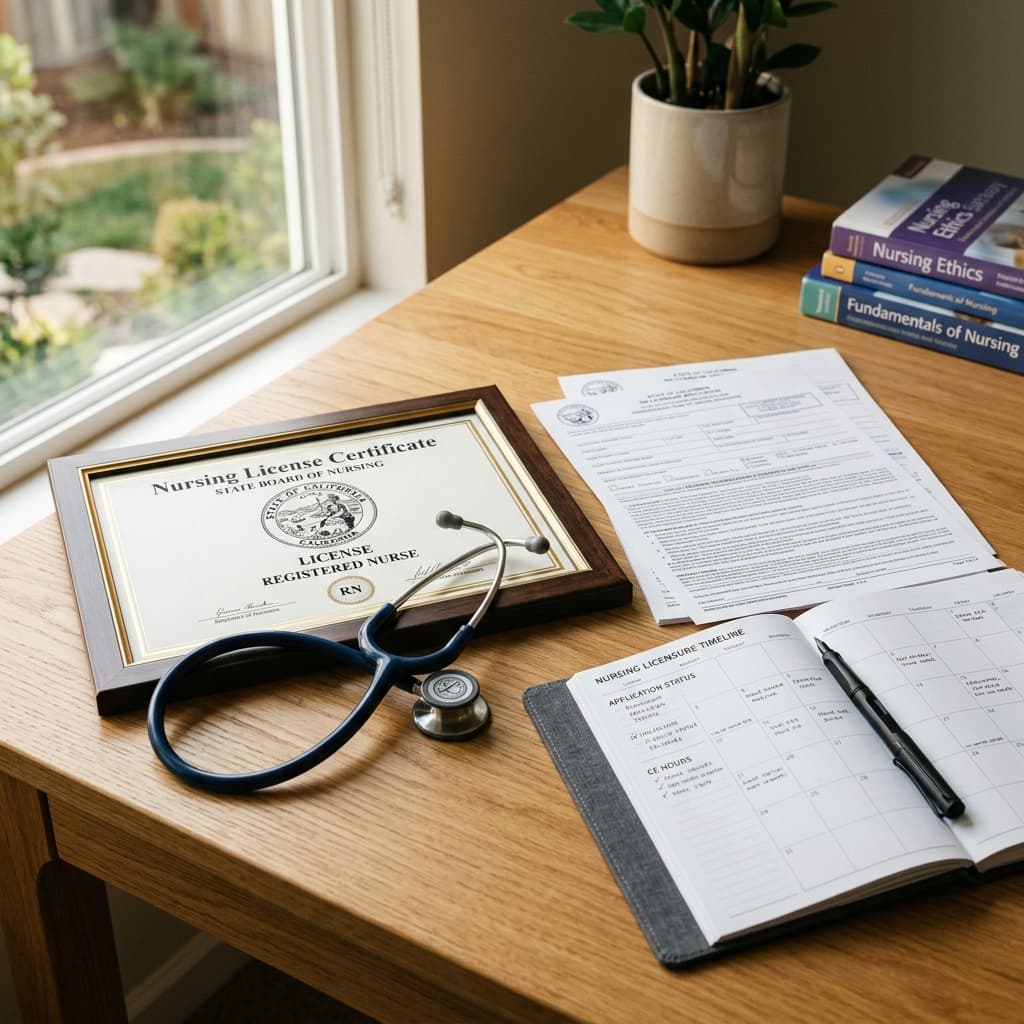
Key Takeaway: California is transitioning from Restricted to Full Practice Authority under AB 890. Between the many Mental Health HPSAs HRSA has designated across the state, strong pay, and the state's large behavioral health loan repayment program, demand for PMHNPs in California is high. Be prepared for a lengthy licensing process, though: 10-12+ weeks for RN endorsement alone. See current advertised pay for PMHNPs in California.
Welcome to your complete guide to becoming a Psychiatric-Mental Health Nurse Practitioner (PMHNP) in California. HRSA designates Mental Health Professional Shortage Areas throughout the state, covering a large share of the population, and publishes the current count and the share of need met for each one. To address that gap, California is actively expanding practice authority and funding loan repayment for behavioral health providers.
If you are looking to launch or transition your PMHNP career in the Golden State, here is a detailed breakdown of 2026 licensing, practice authority, and earning potential.
Quick Reference Table
| Category | California PMHNP Details |
|---|---|
| Practice Authority Type | Restricted / Transitioning to Full (AB 890) |
| Governing Board | California Board of Registered Nursing (BRN) |
| Initial License Fee | Varies: see steps below |
| Renewal Period & Fee | Every 2 years |
| CE Hours Required | 30 hours every 2 years |
| NLC Compact State? | ❌ No |
| APRN Compact? | ❌ No |
| Average PMHNP Salary | See current advertised pay in California |
| Prescriptive Authority | Yes (Requires Furnishing Number) |
Fees, renewal periods, and CE hours above are set by the California Board of Registered Nursing. Verify the current amounts with the BRN before you apply.
Step-by-Step Licensure Guide
Because California is not a compact state, the licensing process can take considerable time. Expect the RN endorsement alone to take 10 to 12+ weeks.
Step 1: Complete MSN or DNP with PMHNP Focus
Graduate from an accredited Master of Science in Nursing (MSN) or Doctor of Nursing Practice (DNP) program with a psychiatric-mental health specialty focus.
- Documents: Official transcripts sent directly to the California BRN
- Timeline: 2-4 years depending on program type
Step 2: Pass the ANCC PMHNP-BC Exam
Before applying to the state, you must pass your national boards.
| Membership Status | Exam Fee |
|---|---|
| Non-member | $395 |
| ANA member | $295 |
| AANP member | $340 |
These exam fees are set by the ANCC. Verify the current amount with the ANCC before you register.
Learn more about the PMHNP-BC credential
Step 3: Apply for California RN License
California is NOT a Nurse Licensure Compact (NLC) state, and there is no pending legislation to join. You must apply for a single-state RN license by endorsement.
- Processing Time: 10-12+ weeks (the California BRN is notoriously backlogged)
- Documents: Application, fingerprint-based background checks via Live Scan
- Important: Start this process months before your anticipated start date
Step 4: Apply for NP Certification with the BRN
Once your RN license is active, apply for your NP certification. You will need to provide proof of your national certification and official transcripts.
Step 5: Obtain a Furnishing Number
California uses a "Furnishing Number" for prescriptive authority, an arrangement unique to California.
- You must complete a BRN-approved advanced pharmacology course
- To furnish Schedule II controlled substances, you need:
- A DEA registration, plus a Schedule II continuing education course of at least 3 hours by your renewal to keep the privilege
Step 6: Apply for DEA Registration
Register with the Drug Enforcement Administration to prescribe controlled substances.
- Fees: the DEA sets the registration fee, currently about $888 for 3 years. Verify the current amount with the DEA before you register.
- Requirement: Use your California practice address on the application
Step 7: Apply for NPI Number
Obtain your National Provider Identifier (NPI) via the CMS NPPES system (Free).
California Practice Authority Details
Current status: Historically, California has been a restricted practice state, requiring NPs to operate under "standardized procedures" (a collaborative agreement) with a physician. However, the state is in a multi-year transition toward full practice authority under Assembly Bill 890 (AB 890).What AB 890 Changed
AB 890 established two new categories of NPs:
103 NPs can practice without standardized procedures, but only within a group setting defined in state law (such as a clinic, health facility, or medical group) where at least one physician and surgeon also practices. 104 NPs are eligible for fully independent practice outside of group settings. To qualify, an NP must complete a 4,600-hour transition to practice and then practice in good standing for 3 years as a 103 NP. The BRN is now accepting 104 NP applications.What This Means Day-to-Day
Because the AB 890 pathway started in 2023, the very first wave of eligible NPs are on track to achieve 104 NP (fully independent) licensure in 2026. Until you meet these specific clinical hour requirements, you must continue to practice under standardized procedures or, as a 103 NP, within a qualifying group setting.
Bottom line: California is moving toward full independence, but the pathway is long: a 4,600-hour transition to practice, then 3 years as a 103 NP before you can apply for 104 status. If you're coming from an FPA state, expect more structure initially.
Prescriptive Authority (Furnishing) in California
What is a Furnishing Number?In California, prescriptive authority is tied to a Furnishing Number issued by the BRN. This is California's unique equivalent of prescriptive authority in other states.
What can PMHNPs prescribe?PMHNPs with a furnishing number can order, administer, dispense, and prescribe pharmacological agents.
Schedule II-V rules:- PMHNPs can prescribe Schedule II through V controlled substances
- Schedule II medications (stimulants, certain opioids) require:
- For NPs working under standardized procedures, a patient-specific protocol approved by the treating or supervising physician (this also applies to Schedule III)
Formulary restrictions:For NPs not yet practicing independently under AB 890, prescribing remains subject to the guidelines outlined in their standardized procedures.
CE requirements:License renewal requires 30 contact hours every two years.
Telehealth Rules in California
Can PMHNPs provide telehealth?Yes. California has strong parity laws for telehealth reimbursement, and Place of Service (POS) code 10 (home-based telehealth) is widely recognized.
Out-of-state provider requirements:Because California is not an NLC or APRN compact state, out-of-state PMHNPs must hold a single-state California RN and NP license to treat patients physically located in California via telehealth.
Controlled substance teleprescribing:Under the DEA's fourth temporary telemedicine rule, you can prescribe Schedule II to V controlled substances without a prior in-person evaluation through December 31, 2026. State law still applies.
Browse telehealth PMHNP jobs or remote positionsSalary & Job Market
Average Salary
High demand and a high cost of living put California among the best-paying states for nurse practitioners, and psychiatric roles generally advertise above the all-specialty NP average. For what employers in the state are actually posting, see current advertised pay for PMHNPs in California, which is built from live listings rather than a single survey.
For a national reference point, the Bureau of Labor Statistics puts nurse practitioner pay at a median of $132,300 (BLS Occupational Outlook Handbook, Nurse Practitioners, as of May 2025). That figure covers all NP specialties, not PMHNPs specifically.
See our full 2026 PMHNP Salary Guide for national comparisonsTop Metro Markets
California has the highest annual mean wage for nurse practitioners of any state, according to the Bureau of Labor Statistics (May 2025, all NP specialties), and the San Francisco Bay Area is among its best-paying regions. Key markets include:
- San Francisco: strong pay, offset by a very high cost of living
- San Jose / Silicon Valley: tech-driven healthcare demand
- Los Angeles: largest metro, massive volume
- San Diego: military/VA plus private practice hub
Demand Data
| Metric | California Data |
|---|---|
| Mental Health HPSAs | 643 designations, per HRSA as of September 30, 2026 |
| Share of need met in designated shortage areas | Only 21.91% |
| Additional practitioners needed | 673 to remove the shortage designations |
| Population in shortage areas | About 12.3 million Californians |
Major Employers
- Kaiser Permanente: largest integrated health system in CA
- UCLA Health: academic medical center
- Sutter Health: major Northern California system
- VA Health System: multiple facilities statewide
- County mental health systems: 58 counties, all hiring
- Telehealth companies: Cerebral, Talkiatry, and more
Loan Repayment & Incentive Programs
California offers one of the largest loan repayment programs in the country for behavioral health providers:
| Program | Award Amount | Service Requirement |
|---|---|---|
| Medi-Cal Behavioral Health SLRP (MBH-SLRP) | Up to $240,000, set by HCAI | A multi-year service obligation (2 to 4 years) in a qualifying Medi-Cal safety net setting (FQHCs, CMHCs, RHCs) |
| NHSC Loan Repayment (SUD Workforce) | Up to $75,000 | 3 years at an approved NHSC site |
| NHSC Loan Repayment (Rural Community) | Up to $100,000 | 3 years at an approved NHSC site |
Award maxima are set by the programs themselves: the MBH-SLRP by the Department of Health Care Access and Information (HCAI), the other two by the National Health Service Corps. They change between cycles, so verify the current amount with the program before you apply.
The MBH-SLRP is part of the state's broader BH-CONNECT Workforce Initiative designed specifically to retain behavioral health professionals in underserved communities. At $240,000, it is one of the largest state-level loan repayment programs open to PMHNPs.
Tips for PMHNPs Moving to California
- Plan for Long Licensing Timelines: The California BRN is notoriously backlogged. The RN endorsement alone can take 10-12+ weeks. Start your paperwork months before your anticipated start date.
- Track Your Hours Carefully: If you want to achieve full independent practice (104 NP status) under AB 890, you must meticulously log your 4,600-hour transition to practice and then your 3 years as a 103 NP.
- Complete Mandatory State Training: California requires all new licensees to complete a one-time 1-hour implicit bias training.
- Leverage Loan Forgiveness: Do not miss out on the MBH-SLRP, run by the Department of Health Care Access and Information (HCAI). Up to $240,000 in loan repayment, in exchange for a multi-year service commitment in a Medi-Cal safety net setting, can drastically offset California's high cost of living.
- Consider the Bay Area vs. Southern CA: Bay Area pays the highest, but cost of living is extreme. Southern California (San Diego, Inland Empire) offers strong salaries with more affordable housing.
Frequently Asked Questions
Q: How often do I need to renew my PMHNP license in California?A: California requires license renewal every two years, accompanied by 30 contact hours of continuing education.
Q: Can I practice independently in California right after graduation?A: No. Under AB 890, you must first complete a transition to practice of 4,600 hours. You can then practice as a 103 NP, without standardized procedures but only in a group setting, and after 3 years in good standing as a 103 NP you can apply for 104 NP status to practice fully independently.
Q: Is California part of the Nurse Licensure Compact (NLC)?A: No. California has not enacted the NLC or the APRN compact, and there is no pending legislation to do so. You must apply for a single-state California license to practice.
Q: Do I need a special number to prescribe medications in California?A: Yes. Instead of standard prescriptive authority, California issues a "Furnishing Number." To get this, you must complete advanced pharmacology coursework. For Schedule II drugs, that coursework must include Schedule II content (continuing education does not count toward initial Schedule II authority), and you need a DEA registration.
Ready to find PMHNP jobs in California?
Browse California PMHNP positions | All PMHNP jobs | 2026 Salary Guide