
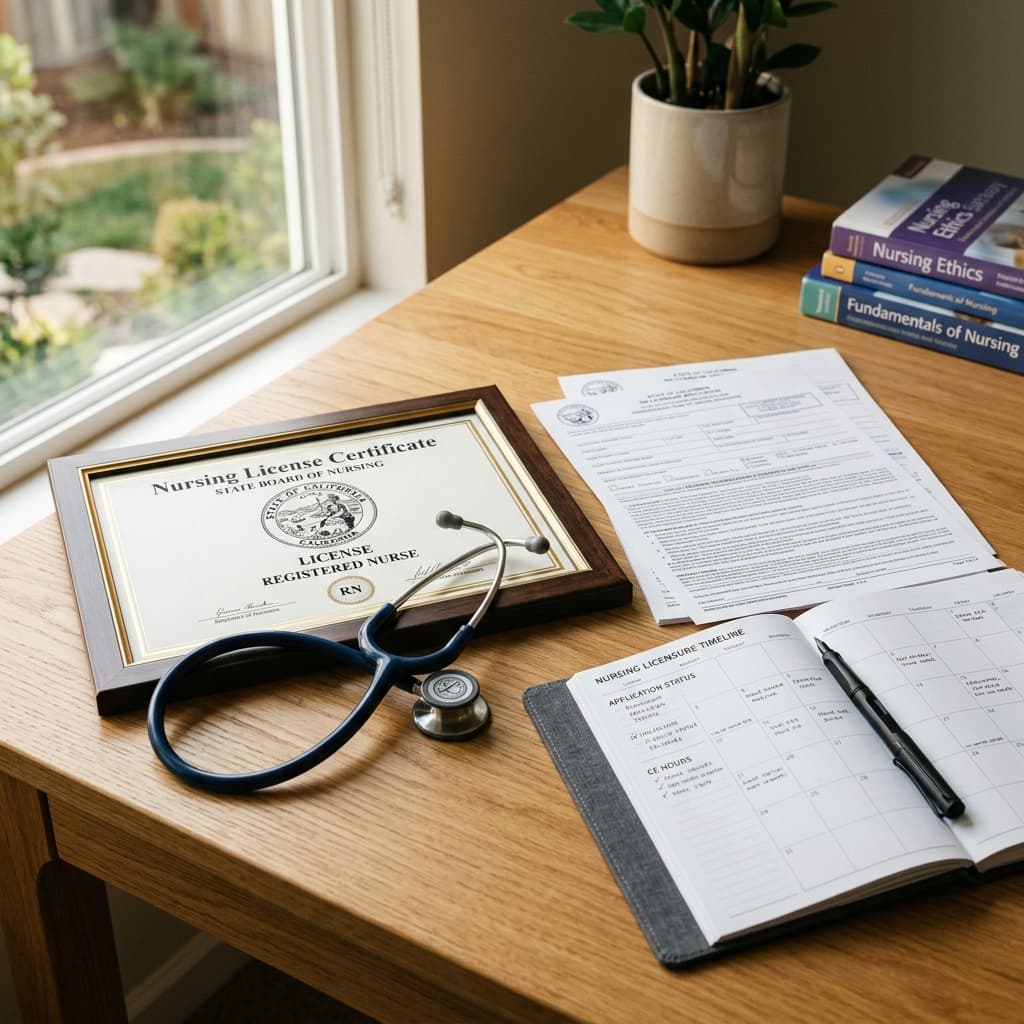
Key Takeaway: Illinois is a Reduced Practice state with a clear path to Full Practice Authority after 4,000 clinical hours + 250 CE hours. A state loan repayment program runs alongside the federal NHSC awards, and as of September 30, 2026, HRSA's Mental Health HPSA data puts Illinois at only 20.97% of assessed need met in its designated shortage areas, with 395 more practitioners needed to remove its shortage designations, making it one of the highest-demand states for PMHNPs. See current advertised pay for PMHNPs in Illinois.
If you are a Psychiatric-Mental Health Nurse Practitioner (PMHNP) looking to practice in Illinois, you are entering a state with a massive need for behavioral health providers. As of September 30, 2026, HRSA's Mental Health HPSA data puts Illinois at only 20.97% of assessed need met in its designated mental health shortage areas, with an additional 395 practitioners required to eliminate its designated shortage areas.
To help address this gap, Illinois offers a clear pathway to Full Practice Authority (FPA) for experienced NPs. Here is your complete, step-by-step guide to obtaining your PMHNP license in the Prairie State for 2026.
Quick Reference Table
| Category | Illinois PMHNP Details |
|---|---|
| Practice Authority Type | Reduced Practice (Transition to FPA available) |
| Governing Board | IDFPR / Board of Nursing |
| Initial License Fee | See steps below |
| Renewal Period & Fee | Every 2 years |
| CE Hours Required | 80 contact hours every 2 years (incl. 20 in pharmacotherapeutics + state mandates) |
| NLC Compact State? | ❌ No (2025 bills to join stalled in committee) |
| APRN Compact? | ❌ No |
| Advertised PMHNP Pay | Current advertised pay in Illinois |
| Prescriptive Authority | Yes, collaborative initially; Schedule II limited to 30-day supply |
Step-by-Step Licensure Guide
Because Illinois is not a compact state, the licensing process involves securing both an RN and an APRN license through the state.
Step 1: Complete MSN or DNP with PMHNP Focus
Graduate from an accredited master's or doctoral program with a psychiatric-mental health specialty focus.
Step 2: Pass the ANCC PMHNP-BC Exam
You must pass your national board certification exam and maintain active certification to practice in Illinois. The ANCC sets the exam fee and adjusts it periodically, so verify the current amount with the ANCC before you register.
| Membership Status | ANCC Exam Fee |
|---|---|
| Non-member | $395 |
| ANA member | $295 |
| AANP member | $340 |
Learn more about the PMHNP-BC credential
Step 3: Apply for Your IL RN License
Illinois is not an NLC state, so you must apply for a single-state RN license by endorsement.
- Processing time: varies with the Department's workload and how quickly your verifications arrive, so apply well before your start date
- Note: Bills to join the NLC (HB 1706, HB 1652, SB 102) were filed in 2025 but stalled in committee, and none has become law
Step 4: Apply for Your IL APN License
Submit your Advanced Practice Nurse application through the IDFPR online portal.
- Documents: Official transcripts + proof of national certification sent directly to the board
- Processing time: Several weeks
Step 5: Establish a Collaborative Agreement (If <4,000 Hours)
To practice and prescribe legally as a new graduate, you must establish a written collaborative agreement with a physician. This outlines the categories of care, treatment, or procedures you can provide.
Step 6: Register with the DEA and State
- Apply for your federal DEA registration using your Illinois practice address
- Obtain an Illinois Controlled Substance Registration (CSR), which requires its own CE standards to maintain
- CSR renewal requires: 1 hour of continuing education on safe opioid prescribing practices each renewal period, which can count toward your 80 hours; if your collaborating physician delegates Schedule II authority, state law also requires 5 hours of pharmacology CE every year
Step 7: Apply for an NPI Number
Obtain your National Provider Identifier (NPI) via the CMS NPPES system (Free).
IL Practice Authority Details
Current status: Illinois operates under a Reduced Practice model for new nurse practitioners. Collaborative agreement for new grads:By default, PMHNPs must maintain a written collaborative agreement with a physician outlining the categories of care, treatment, or procedures the NP can provide.
Transition to Full Practice Authority (FPA)
Illinois offers a clear pathway to independent practice. An APRN can apply for APRN-FPA licensure after meeting these milestones:
| Requirement | Details |
|---|---|
| National certification | Must be current |
| Clinical experience | 4,000 hours minimum |
| Continuing education | 250 hours of CE or training |
Day-to-day impact: For your first few years of practice, you will work under a collaborative physician's oversight. Once you meet the 4,000-hour and 250-CE hour milestones, you can submit a notarized attestation to the IDFPR to practice and prescribe without a collaborative agreement.
Prescriptive Authority in IL
What can PMHNPs prescribe?Under a collaborative agreement, PMHNPs can be delegated authority to prescribe prescription drugs and Schedule II-V controlled substances. Once FPA status is achieved, you can prescribe without a collaborative agreement, with two limits: Schedule II narcotics such as opioids require a consultation relationship with a physician, and benzodiazepines need a physician consultation after the first 120-day supply.
Schedule II rules:| Restriction | Details |
|---|---|
| Supply limit | 30-day supply for Schedule II |
| Delegation | The collaborating physician must name each delegated Schedule II drug by brand or generic name, limited to oral, topical, or transdermal forms the physician routinely prescribes |
1 hour of continuing education on safe opioid prescribing practices each renewal period, plus 5 hours of pharmacology CE every year if your collaborating physician has delegated Schedule II authority.
Telehealth Rules in IL
Can PMHNPs do telehealth?Yes. Illinois offers broad reimbursement for live video and store-and-forward telehealth services.
Out-of-state requirements:Because Illinois is not a member of the NLC or the APRN Compact, out-of-state PMHNPs wishing to provide telehealth services to patients physically located in Illinois must obtain an active, single-state Illinois RN and APRN license.
Controlled substance teleprescribing:Federal DEA and HHS flexibilities allowing providers to prescribe controlled substances via telemedicine without a prior in-person evaluation have been extended through December 31, 2026.
Browse telehealth PMHNP jobs or remote positionsSalary & Job Market
What the Role Pays
Demand for behavioral health professionals in Illinois is intense. We publish what Illinois employers are advertising rather than a headline figure we cannot trace to a source: see current advertised pay for PMHNPs in Illinois, drawn from live listings on this site.
See our full 2026 PMHNP Salary Guide for national comparisonsTop Metro Markets
- Chicago: Massive metro, dense CCBHC market
- Naperville: Suburban Chicago market
- Springfield: State capital, government roles
- Rockford: Northern IL demand
- Peoria: Central IL hub
Demand Data
| Metric | Illinois Data |
|---|---|
| Share of need met in designated shortage areas | Only 20.97% |
| Additional practitioners needed | 395 to remove the shortage designations |
Major Employers
- Rush University Medical Center: Major Chicago academic center
- Northwestern Medicine: Chicago-area network
- Advocate Health Care: Major Illinois system, part of Advocate Health since 2022
- UI Health: University of Illinois system
- CCBHCs: Dense market of Certified Community Behavioral Health Clinics in Chicagoland
- VA Health System: Multiple IL facilities
Loan Repayment & Incentive Programs
Practicing in Illinois shortage areas provides access to excellent loan forgiveness. The federal maximums below are set by HRSA's National Health Service Corps and the state award is set by the Illinois Department of Public Health; verify the current amount with the awarding body before you apply:
| Program | Award Amount | Service Requirement |
|---|---|---|
| IL Dept. of Public Health SLRP | Set by the state program each funding cycle | Typically 2 years in underserved area |
| NHSC SUD Workforce LRP | Up to $75,000 (NHSC maximum) | 3 years full-time at an NHSC-approved SUD facility |
| NHSC Rural Community LRP | Up to $100,000 (NHSC maximum) | 3 years full-time at a rural NHSC-approved facility |
Tips for PMHNPs Moving to IL
- Prepare for Strict CE Requirements: Illinois requires 80 contact hours every two years. You must include 20 hours in pharmacotherapeutics (10 of them in opioid prescribing or substance abuse education), plus state-mandated training on implicit bias awareness, sexual harassment prevention, and cultural competency, and on Alzheimer's disease and other dementias if you treat adults 26 or older. IDFPR publishes the required topics and how often each one applies.
- Track Your Hours Meticulously: To drop your collaborative agreement and achieve FPA, carefully document your 4,000 hours of clinical experience and 250 CE hours.
- Apply for Licensure Early: Because Illinois is not a compact state, you cannot rely on a multistate RN license. You must secure a single-state license before practicing, so start the endorsement application early.
- Target CCBHCs: The Chicago metropolitan area has a dense market of Certified Community Behavioral Health Clinics (CCBHCs) that frequently hire PMHNPs and often qualify for federal loan repayment programs.
- Factor in State Income Tax: Illinois has a flat 4.95% state income tax. Model your take-home against the offer in front of you rather than a headline average, and compare it with current advertised pay in Illinois.
Frequently Asked Questions
Q: Is Illinois a Full Practice Authority state for PMHNPs?A: Eventually, yes. Illinois is a reduced practice state by default, requiring a collaborative agreement. However, after completing 4,000 hours of clinical experience and 250 hours of continuing education, you can apply for Full Practice Authority to practice independently.
Q: Is Illinois part of the Nurse Licensure Compact (NLC)?A: No. Illinois is not currently a member of the NLC: bills to join the compact (HB 1706, HB 1652, SB 102) were filed in 2025 but stalled in committee. You must apply for a single-state Illinois license to practice.
Q: What can a PMHNP prescribe in Illinois?A: Under a collaborative agreement, a PMHNP can prescribe Schedule II-V controlled substances, but Schedule II medications are strictly limited to a 30-day supply. The collaborating physician must name each delegated Schedule II drug, and only oral, topical, or transdermal forms can be delegated. Once FPA is achieved, PMHNPs prescribe without a collaborative agreement, although Schedule II narcotics such as opioids still require a consultation relationship with a physician, and benzodiazepines need one after a 120-day supply.
Q: How many CE hours do I need to renew my IL PMHNP license?A: Illinois requires 80 contact hours every two years. This must include 20 hours in pharmacotherapeutics (with 10 in opioid prescribing or substance abuse education), plus state-mandated training on implicit bias awareness, sexual harassment prevention, and cultural competency, and on dementia care if you treat adults 26 or older. CSR renewal requires 1 hour on safe opioid prescribing practices, which can count toward the 80.
Ready to find PMHNP jobs in Illinois?
Browse Illinois PMHNP positions | All PMHNP jobs | 2026 Salary Guide