
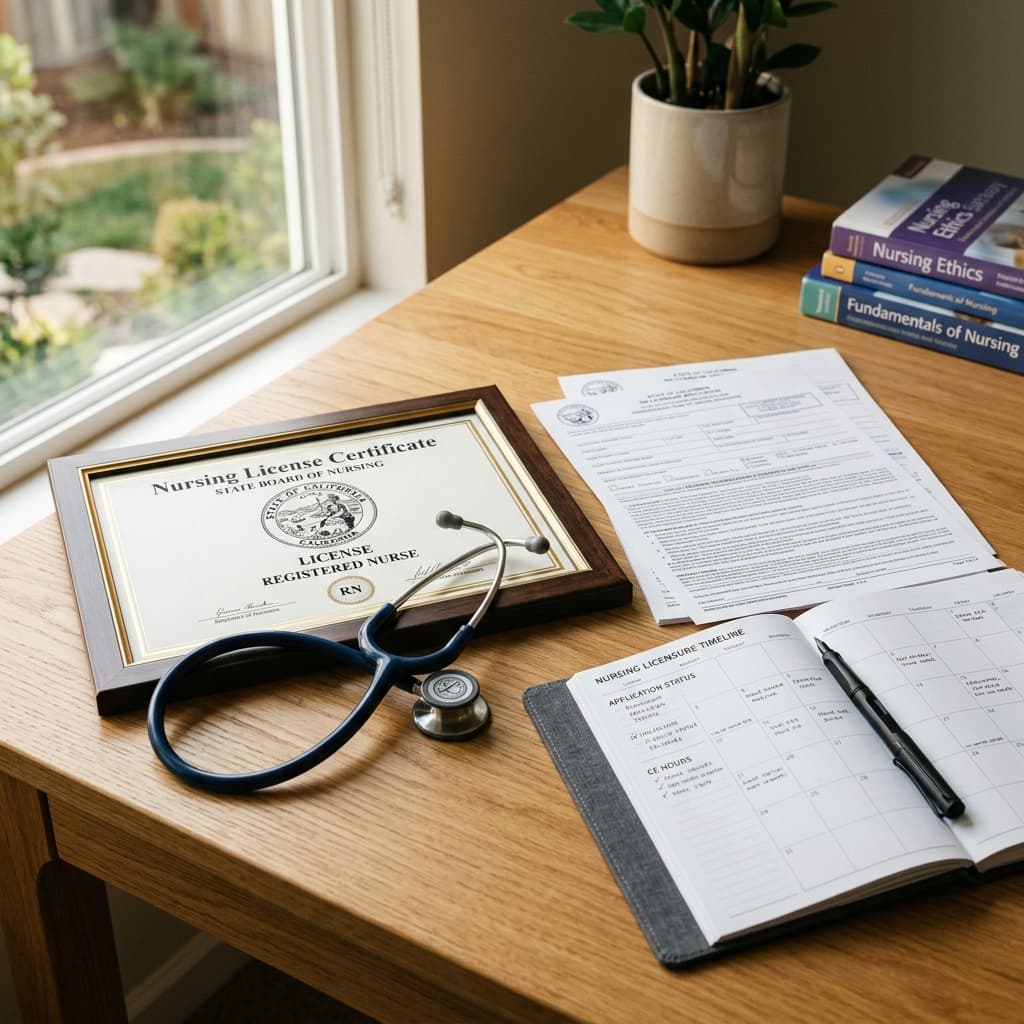
Key Takeaway: Pennsylvania is a Reduced Practice state requiring a collaborative agreement, and requires agreements with two physicians for prescriptive authority. As of September 30, 2026, HRSA's Mental Health HPSA data puts the state at only 34% of assessed need met in its designated mental health shortage areas, and a state loan repayment program runs alongside the federal NHSC awards. PA rewards careful navigation of its licensing process, so start your applications early. See current advertised pay for PMHNPs in Pennsylvania.
If you are a Psychiatric-Mental Health Nurse Practitioner (PMHNP) looking to practice in Pennsylvania, you are entering a state with a critical need for behavioral health professionals. As of September 30, 2026, HRSA's Mental Health HPSA data puts Pennsylvania at only 34.26% of assessed need met in its designated mental health shortage areas, with an additional 67 practitioners required to eliminate its designated shortage areas.
Navigating Pennsylvania's licensure process requires careful attention to collaborative agreement mandates and specific continuing education requirements. Here is your complete, step-by-step guide to obtaining your PMHNP license in the Keystone State for 2026.
Quick Reference Table
| Category | Pennsylvania PMHNP Details |
|---|---|
| Practice Authority Type | Reduced Practice |
| Governing Board | PA State Board of Nursing |
| Initial License Fee | $100 for CRNP certification ($140 if you were educated outside Pennsylvania), plus $95 to apply for prescriptive authority |
| Renewal Period & Fee | Every 2 years, with your RN license: $81 for CRNP certification, plus $41 for prescriptive authority |
| CE Hours Required | 30 contact hours every 2 years (incl. 2 hrs child abuse recognition; prescribers need at least 16 hrs in pharmacology and, if they hold or use a DEA registration, 2 hrs in pain mgmt, addiction or opioid prescribing; from May 1, 2026, 2 hrs on organ and tissue donation, a one-time requirement due within 5 years) |
| NLC Compact State? | ✅ Yes |
| APRN Compact? | ❌ No |
| Advertised PMHNP Pay | Current advertised pay in Pennsylvania |
| Prescriptive Authority | Yes, requires collaborative agreement. Schedule II limited to 30-day supply |
Step-by-Step Licensure Guide
Processing time depends partly on how quickly the Board receives your transcripts, verifications and fingerprint-based background check results. Start early and follow these steps:
Step 1: Complete MSN or DNP with PMHNP Focus
Graduate from an accredited program. To qualify for prescriptive authority in Pennsylvania, you must complete 45 hours of coursework in advanced pharmacology.
Step 2: Pass the ANCC PMHNP-BC Exam
You must pass your national board certification exam and maintain active certification to practice. The ANCC sets the exam fee and adjusts it periodically, so verify the current amount with the ANCC before you register.
| Membership Status | ANCC Exam Fee |
|---|---|
| Non-member | $395 |
| ANA member | $295 |
| AANP member | $340 |
Learn more about the PMHNP-BC credential
Step 3: Apply for Your PA RN License
Pennsylvania is a member of the Nurse Licensure Compact (NLC). If your primary state of residence is another compact state, your multistate RN license is valid here. Otherwise, apply for a single-state RN license.
Step 4: Apply for Your PA CRNP License
Submit your Certified Registered Nurse Practitioner (CRNP) application via the state's PALS portal.
| Item | Cost |
|---|---|
| Initial Licensing Fee (set by the PA State Board of Nursing) | $100 for CRNP certification ($140 if you were educated outside Pennsylvania), plus $95 to apply for prescriptive authority |
| FBI Background Check | Fingerprint-based, part of the Pennsylvania RN license application rather than the CRNP certification |
- Processing time: varies with how quickly your documents reach the Board, so apply well before your start date
- Documents: Transcripts and national certification, plus fingerprints if you are also applying for a Pennsylvania RN license
Step 5: Establish a Collaborative Agreement
To practice legally, you must maintain a career-long written agreement with one or more physicians.
Critical: If you want prescriptive authority, you must have a prescriptive authority collaborative agreement with at least two physicians.
Step 6: Register with the DEA
Apply for your federal DEA registration to prescribe controlled substances using your Pennsylvania practice address.
- Fees: the DEA sets this fee (roughly $888 for a three-year registration); verify the current amount with the DEA before you apply
Step 7: Apply for an NPI Number
Obtain your National Provider Identifier (NPI) via the CMS NPPES system (Free).
PA Practice Authority Details
Current status: Pennsylvania is a Reduced Practice state. Collaborative agreement requirements:CRNPs must have a written collaboration agreement signed by both the CRNP and the collaborating physician(s). Under this agreement, a CRNP can perform comprehensive assessments, establish medical diagnoses, order and supervise diagnostic tests, and implement treatment plans.
Pending Legislation:Senate Bill 25 of the 2025 to 2026 session would remove the collaborative agreement requirement for nurse practitioners after a three-year, 3,600-hour period of physician collaboration. As of August 1, 2026, it had not moved out of the Senate Consumer Protection and Professional Licensure Committee, so check the General Assembly's bill page for its current status.
Day-to-day impact: Your clinical and prescriptive decisions are officially tied to the scope outlined in your written collaboration agreement, and your collaborating physician may review your patient records to ensure clinical competence.
Prescriptive Authority in PA
What can PMHNPs prescribe?When acting under a collaborative agreement, CRNPs can prescribe and dispense drugs, as well as order therapeutic or corrective measures.
Schedule II-V rules:Pennsylvania allows prescribing of Schedule II through V controlled substances with strict duration limits:
| Schedule | Maximum Supply |
|---|---|
| Schedule II | 30-day supply |
| Schedule III and IV | 90-day supply |
To maintain prescriptive authority, you must maintain agreements with at least two physicians.
Telehealth Rules in PA
Can PMHNPs do telehealth?Yes. Pennsylvania features Medicaid reimbursement for live video and remote patient monitoring (RPM). Federal opioid treatment program rules (42 CFR 8.12) let the initial examination for buprenorphine or methadone treatment be done by telehealth when a practitioner judges that adequate; Pennsylvania's narcotic treatment program rules (28 Pa. Code Chapter 715) apply as well, so confirm the state's current requirements.
Out-of-state requirements:Pennsylvania has joined the NLC, making cross-border practice easier for RNs. However, because the APRN Compact is not enacted, out-of-state PMHNPs must still hold a Pennsylvania CRNP license to treat patients located in PA.
Controlled substance teleprescribing:Under the DEA's fourth temporary telemedicine rule, DEA-registered practitioners can prescribe Schedule II to V controlled substances by telemedicine without a prior in-person evaluation through December 31, 2026. Check the DEA for an extension or a final rule before relying on it after that date. Medicare's separate telehealth flexibilities run through December 31, 2027, and Pennsylvania law still applies.
Browse telehealth PMHNP jobs or remote positionsSalary & Job Market
What the Role Pays
Demand for mental health providers in Pennsylvania is intense. We publish what Pennsylvania employers are advertising rather than a headline figure we cannot trace to a source: see current advertised pay for PMHNPs in Pennsylvania, drawn from live listings on this site.
See our full 2026 PMHNP Salary Guide for national comparisonsTop Metro Markets
- Philadelphia: Largest metro, Penn Medicine + Jefferson hub
- Pittsburgh: UPMC headquarters, massive system
- Harrisburg: State capital, government roles
- Allentown/Lehigh Valley: Growing health corridor
- Scranton: Northeast PA demand
Demand Data
| Metric | Pennsylvania Data |
|---|---|
| Share of need met in designated shortage areas | Only 34.26% |
| Additional practitioners needed | 67 to remove the shortage designations |
Major Employers
- Penn Medicine: Premier academic system (Philadelphia)
- UPMC: Pittsburgh powerhouse (40+ hospitals)
- Jefferson Health: Major Philadelphia network
- Geisinger: Central PA leader in integrated care
- VA Health System: Multiple PA facilities
- Community mental health centers: Statewide
Loan Repayment & Incentive Programs
Practicing in Pennsylvania's shortage areas unlocks substantial loan forgiveness. The federal maximums below are set by HRSA's National Health Service Corps and the state award is set by the Pennsylvania Department of Health; verify the current amount with the awarding body before you apply:
| Program | Award Amount | Service Requirement |
|---|---|---|
| PA Dept. of Health Primary Care LRP | Set by the state program each funding cycle | Typically 2 years in underserved area |
| NHSC SUD Workforce LRP | Up to $75,000 (NHSC maximum) | 3 years full-time at an NHSC-approved SUD facility |
| NHSC Rural Community LRP | Up to $100,000 (NHSC maximum) | 3 years full-time at a rural NHSC-approved facility |
Tips for PMHNPs Moving to PA
- Plan Ahead for Licensing: Processing time depends partly on how quickly the Board receives your transcripts, verifications and background check results. Submit your applications well ahead of your anticipated start date.
- Secure Two Collaborating Physicians: If you intend to prescribe medications, remember that Pennsylvania specifically requires a prescriptive authority collaborative agreement with at least two physicians.
- Complete Mandatory State Training: To renew your license, you must complete 2 hours of approved child abuse recognition and reporting training every two years.
- Monitor Your Pharmacology CEs: If you hold prescriptive authority, at least 16 of your 30 required biennial CE hours must be in pharmacology, and if you hold or use a DEA registration, at least 2 hours must cover pain management, identification of addiction, or practices of prescribing/dispensing opioids.
- Consider Rural PA: Central and northern Pennsylvania have significant HPSA designations, offering better loan repayment eligibility. Geisinger's rural presence makes it a natural employer for PMHNPs seeking both competitive pay and loan forgiveness.
Frequently Asked Questions
Q: Is Pennsylvania a full practice authority state for PMHNPs?A: Currently, Pennsylvania is a reduced practice state. You must maintain a written collaborative agreement with a physician to practice, and at least two physicians to prescribe. Senate Bill 25, which would drop the agreement requirement after three years and 3,600 hours of physician collaboration, was still in committee as of August 1, 2026.
Q: Can PMHNPs in Pennsylvania prescribe Schedule II controlled substances?A: Yes. However, Schedule II prescriptions are strictly limited to a 30-day supply, and Schedule III and IV medications are limited to a 90-day supply.
Q: Is Pennsylvania part of the Nurse Licensure Compact (NLC)?A: Yes. Pennsylvania has enacted the NLC, allowing RNs with a multistate license to practice here. However, you still need a PA-specific CRNP license for advanced practice.
Q: What are the CE requirements to renew my PA PMHNP license?A: You must complete 30 contact hours every two years. This must include 2 hours of child abuse recognition and reporting training. Prescribers must also complete at least 16 of the 30 hours in pharmacology and, if they hold or use a DEA registration, at least 2 hours in pain management, identification of addiction or opioid prescribing practices. Beginning May 1, 2026, 2 of the 30 hours must also cover organ and tissue donation and recovery, a one-time requirement to complete within five years.
Ready to find PMHNP jobs in Pennsylvania?
Browse Pennsylvania PMHNP positions | All PMHNP jobs | 2026 Salary Guide