
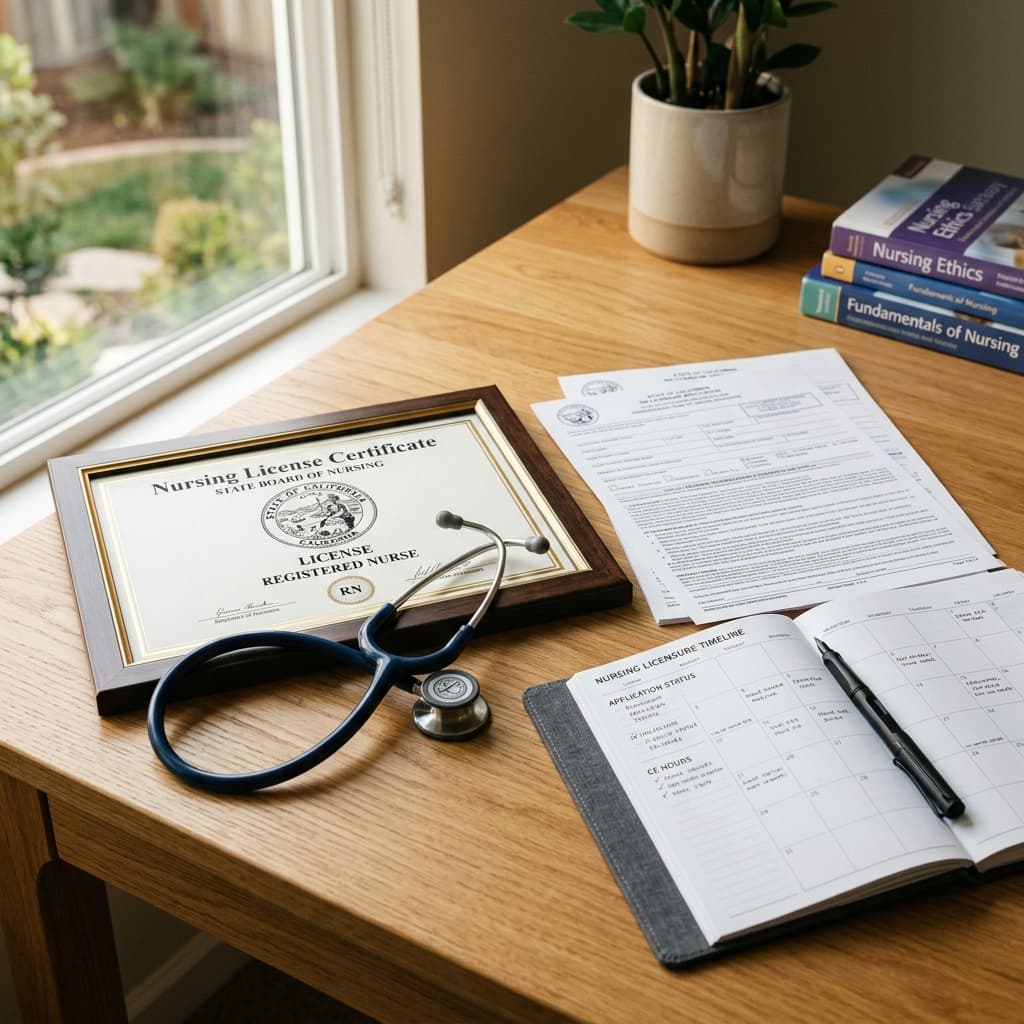
Key Takeaway
Texas is a Restricted Practice state: you need a Prescriptive Authority Agreement (PAA) with a collaborating physician. But with hundreds of HRSA-designated Mental Health HPSAs across the state, and loan repayment of up to $80,000 for psychiatric nurse practitioners through the Texas Mental Health Professionals Loan Repayment Program, demand for PMHNPs in Texas is strong. For pay, see current advertised PMHNP pay in Texas.
Welcome to your ultimate guide for becoming a Psychiatric-Mental Health Nurse Practitioner (PMHNP) in Texas. HRSA designates hundreds of Mental Health Professional Shortage Areas (HPSAs) across the Lone Star State, covering millions of residents. The current designations and the population they cover are published in HRSA's shortage-area data.
If you're looking to start or advance your career in Texas, here is everything you need to know about the 2026 licensing requirements, practice authority, and salary expectations.
Quick Reference Table
| Category | Texas PMHNP Details |
|---|---|
| Practice Authority Type | Restricted Practice |
| Governing Board | Texas Board of Nursing |
| Initial License Fee | Set by the Texas Board of Nursing: $150 for RN endorsement (Nursing Jurisprudence Exam fee included) and $150 for an APRN license with prescriptive authority ($100 for licensure only), plus a criminal background check fee that varies. Check the Board's current fee schedule. |
| Renewal Period & Fee | Every 2 years, at the fee the Board publishes |
| CE Hours Required | 20 contact hours every 2 years, plus 5 additional hours in pharmacotherapeutics with prescriptive authority; opioid prescribers also need 2 hours a year on pain management and opioid prescribing, which count toward the 20 |
| NLC Compact State? | ✅ Yes |
| APRN Compact? | ❌ No (not enacted or pending) |
| PMHNP Pay | Current advertised pay in Texas, from live listings |
| Prescriptive Authority | Yes, but restricted (requires a Prescriptive Authority Agreement) |
Step-by-Step Licensure Guide
Step 1: Complete MSN or DNP
Graduate from an accredited Master of Science in Nursing (MSN) or Doctor of Nursing Practice (DNP) program with a PMHNP focus.
- Documents: Official transcripts sent directly to the Texas Board of Nursing
- Timeline: 2-4 years depending on program type (full-time vs part-time)
Step 2: Pass the ANCC PMHNP-BC Exam
Pass the American Nurses Credentialing Center (ANCC) Psychiatric-Mental Health Nurse Practitioner Board Certified exam. The ANCC sets these fees, so confirm the current amounts with the ANCC before you register:
| Membership Status | Exam Fee |
|---|---|
| Non-member | $395 |
| ANA member | $295 |
| AANP member | $340 |
- Documents needed: Proof of national certification
- Learn more about the PMHNP-BC credential
Step 3: Apply for Texas RN License
Apply for a Texas RN license by endorsement, or verify your current multistate NLC (Nurse Licensure Compact) license.
- Fees: $150 for RN endorsement (Nursing Jurisprudence Exam fee included), plus the criminal background check fee; an active compact RN license is valid in Texas
- Timeframe: The Board does not publish a fixed processing time, so apply early
- Note: Texas is an NLC compact state, so if your primary state of residence is also a compact state, your RN license is already valid
Step 4: Apply for Texas APRN License
Submit your APRN application via the Texas Nurse Portal. The Texas Board of Nursing sets the application fee below and publishes the current schedule. The background check fee varies, so confirm it when you schedule fingerprinting:
| Item | Cost |
|---|---|
| APRN Application Fee | $150 with prescriptive authority ($100 for licensure only) |
| Fingerprinting/Background Check | Varies (set by DPS and the FBI) |
| Total | $150 with prescriptive authority, plus the background check fee |
- Documents required: Transcripts, proof of RN license, and ANCC certification
- Processing time: The Board does not publish a fixed timeline and notes that processing can take longer during graduation season, so apply early
Step 5: Apply for Prescriptive Authority
Establish a formal Prescriptive Authority Agreement (PAA) with a collaborating physician.
- Documents: Written PAA maintained at your practice site
- Important: You cannot prescribe without this agreement, so secure a collaborating physician as early as possible in the hiring process
Step 6: Register with DEA
Register with the Drug Enforcement Administration to prescribe controlled substances.
- Fees: the DEA charges $888 for a three-year practitioner registration. Verify the current fee with the DEA before you apply.
- Requirement: Use your Texas practice address on the application
Step 7: Apply for NPI Number
Obtain a National Provider Identifier (NPI) if you haven't already.
- Fees: Free via the CMS NPPES system
Texas Practice Authority Details
Current status: Texas is a Restricted Practice state for nurse practitioners. This is one of the most restrictive environments in the country. What "restricted" means in practice:- You cannot practice independently. Texas law requires career-long physician delegation and supervision
- You must establish a written protocol or Prescriptive Authority Agreement (PAA) with a physician
- These protocols must be jointly developed and reviewed annually
- Your collaborating physician must be available for consultation (not necessarily on-site)
Legislative watch: Texas nurse practitioner advocacy groups (including Texas Nurse Practitioners / TNP) are actively pushing for full practice authority. Check TNP's website for the latest on pending legislation.
Prescriptive Authority in Texas
What can PMHNPs prescribe?PMHNPs can prescribe medications, including Schedule II-V controlled substances, provided they have a Prescriptive Authority Agreement in place.
Schedule II-V rules:- Texas allows the prescribing of Schedule II-V drugs
- ⚠️ Important limitation: Schedule II drugs (e.g., stimulants like Adderall, certain opioids) can typically only be ordered and prescribed for patients in a hospital or hospice setting
- This is a significant restriction for outpatient psychiatric practice, so discuss workarounds with your collaborating physician
Your PAA must outline the exact steps you will take for specific conditions. The agreement may state the categories of drugs you are allowed to prescribe rather than listing every specific medication.
Continuing education for prescriptive authority:To maintain prescriptive authority, you must also meet these CE requirements every 2 years:
- 5 contact hours in pharmacotherapeutics
- If your agreement authorizes opioid prescribing, 2 contact hours a year (4 per licensing period) on pain management and opioid prescribing, which count toward the standard 20 hours
- The pharmacotherapeutics hours are in addition to the standard 20 CE hours
Telehealth Rules in Texas
Can PMHNPs provide telehealth services?Yes. Texas recognizes and reimburses for telehealth services, including widespread Medicaid use and recognition of Place of Service (POS) Code 10 (home-based telehealth).
Out-of-state provider requirements:Texas is an NLC compact state for RNs, but it has NOT adopted the APRN Compact. Therefore, out-of-state PMHNPs wanting to treat patients in Texas via telehealth must hold a Texas APRN license.
Controlled substance teleprescribing:The DEA's temporary telemedicine rule, extended through December 31, 2026, allows DEA-registered providers to prescribe Schedule II to V controlled substances without a prior in-person evaluation under specific conditions. Texas Schedule II restrictions still apply. Medicare telehealth flexibilities run separately, through December 31, 2027.
Browse telehealth PMHNP jobs or remote positionsSalary & Job Market
What PMHNP Roles Actually Advertise
We do not publish a hand-written average. Pay figures on this site are medians of the salary ranges live postings disclose, published with their sample size, so the current Texas figure lives at /salary-guide/texas. For a national reference point, the BLS reports a median of $132,300 for nurse practitioners (BLS OEWS 29-1171, Nurse Practitioners (all specialties), May 2025), a figure that covers every NP specialty rather than psychiatric NPs specifically.
See our full 2026 PMHNP Salary Guide for national comparisonsDemand Data
| Metric | Texas Data |
|---|---|
| Mental Health HPSAs | 414 designations |
| Share of need met in designated shortage areas | Only 31.93% |
| Additional practitioners needed | 631 to remove the shortage designations |
| Population in shortage areas | About 14.1 million Texans |
Major Employers
PMHNPs in Texas are frequently employed by:
- State psychiatric hospitals (Austin State Hospital, Big Spring State Hospital, etc.)
- Community Mental Health Centers (CMHCs): 39 Local Mental Health Authorities statewide
- VA Health System: multiple facilities across Texas
- Major health systems: Baylor Scott & White, UT Health, Texas Health Resources, HCA Houston Healthcare
- School districts: growing demand for school-based mental health providers
- Telehealth companies: Cerebral, Talkiatry, and others
Loan Repayment & Incentive Programs
Texas has several loan repayment and incentive programs. Each award below is set by the body administering the program, and the maxima change between funding cycles, so verify the current amount with that body before you apply:
| Program | Administered By | Award Amount | Service Requirement |
|---|---|---|---|
| TX Mental Health Professionals Loan Repayment | Texas Higher Education Coordinating Board | Up to $80,000 over 3 years for advanced practice nurses who establish eligibility after Sept 1, 2025 ($60,000 before that date) | Provide direct mental health services to Medicaid/CHIP enrollees in a designated MHPSA, state hospital, or secure correctional facility |
| Rural Communities Health Care Investment Program | Texas Department of Agriculture (Office of Rural Affairs) | Loan reimbursement or stipends for health professionals other than physicians, subject to available funding | A contract to provide health care services in a medically underserved Texas community |
| NHSC Loan Repayment (SUD Workforce) | HRSA | Up to $75,000 | 3 years full-time at an approved NHSC SUD site |
| NHSC Loan Repayment (Rural Community) | HRSA | Up to $100,000 | 3 years full-time at a rural NHSC-approved site |
Tips for PMHNPs Moving to Texas
- Leverage the RN Compact: If your primary state of residence is already an NLC compact state, your RN license covers you in Texas. However, you must apply for a Texas APRN license by endorsement separately.
- Establish Your PAA Early: Because Texas is a restricted practice state, you cannot practice or prescribe without a Prescriptive Authority Agreement. Secure a collaborating physician as early in the hiring process as possible.
- Watch Your Email: Since September 1, 2023, the Texas Board of Nursing sends renewal reminders by email only, through NCSBN's Nursys e-Notify, so register for a free Nursys e-Notify account and keep your contact information current in the Texas Nurse Portal to avoid an expired license.
- Join TNP: Get involved with Texas Nurse Practitioners (TNP) for advocacy support, networking, and keeping up to date on legislative pushes for full practice authority.
- Consider Rural Practice: Up to $80,000 in loan repayment plus the $10,000 rural bonus, both from the Texas Higher Education Coordinating Board, can make a rural Texas position financially attractive if you qualify.
Frequently Asked Questions
Q: How often do I renew my PMHNP license in Texas?A: Every 2 years. You need 20 CE hours, plus 5 hours in pharmacotherapeutics if you have prescriptive authority. If your agreement authorizes opioid prescribing, 2 hours a year on pain management and opioid prescribing count toward the 20.
Q: Is Texas a Full Practice Authority state?A: No. Texas is Restricted Practice, so you need a physician-supervised Prescriptive Authority Agreement (PAA).
Q: Can PMHNPs prescribe Schedule II drugs in Texas?A: Yes, but only for patients in hospital or hospice settings. This is a significant limitation for outpatient practice.
Q: What's the average PMHNP salary in Texas?A: We do not publish a hand-written average. The figure we do publish is the median of the salary ranges live Texas postings disclose, with its sample size, at /salary-guide/texas.
Q: Can I practice telehealth in Texas from another state?A: Yes, but you need a Texas APRN license. The APRN Compact has not been adopted in Texas yet.
Ready to find PMHNP jobs in Texas?
Browse Texas PMHNP positions • All PMHNP jobs • 2026 Salary Guide